Cash vs. Financed Buyers in Pleasanton's Luxury Market: Who's Really Winning in 2026
If you're watching Pleasanton's luxury market from the sidelines — whether you're selling a $3M+ home or trying to buy one without a suitcase of cash — you've probably noticed something that doesn't quite add up. As we enter July, Mortgage rates dropped. Cash offers went up. In my experience walking sellers through listings on streets like Vineyard Avenue and inside Ruby Hill, that's not a coincidence — it's a structural shift in who has the money, and where they're putting it.
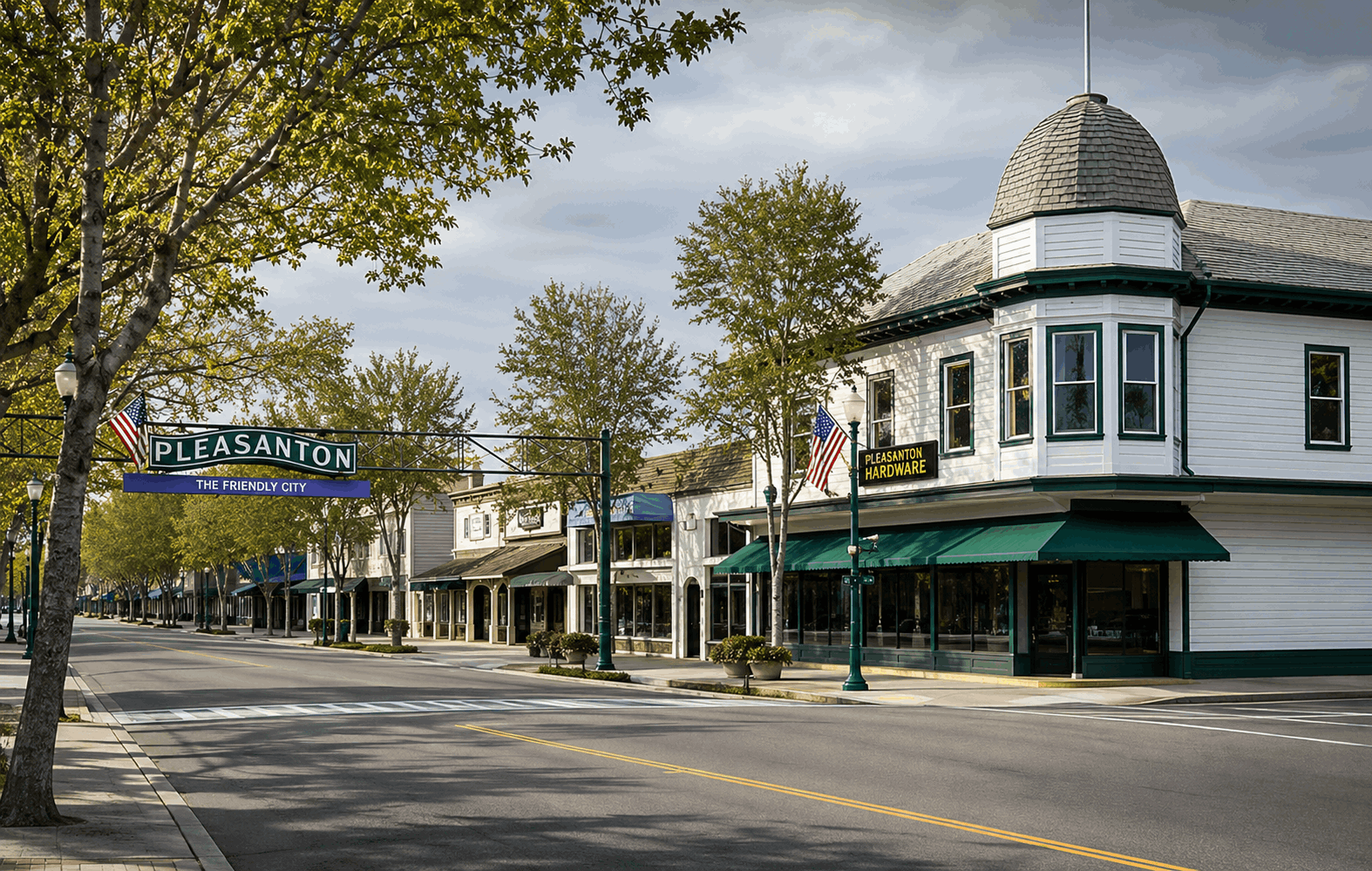
Is Pleasanton a cash or financed buyer's market in 2026?
Pleasanton is still a majority-financed market overall, with roughly 22.6% of all transactions closing in cash as of Q1 2026 — well below Peninsula markets like Palo Alto. But that number hides a sharp split by price: cash share climbs to nearly 30% once you cross into the $3M–$5M band where most of the city's luxury inventory sits.
- Under $1.5M: cash buyers are the exception, not the rule
- $3M–$5M: cash share nearly doubles versus the entry-level tier
- $5M+: cash becomes the dominant closing method
Why did cash buying rise even as mortgage rates fell?
Mortgage rates fell about 72 basis points year-over-year, yet cash share in the $10M–$20M tier actually rose nearly 10 percentage points over the same period. That tells us lower rates aren't pulling luxury buyers back toward financing — they're freeing up mid-tier capital to chase higher price points, which pushes cash further up the ladder rather than pulling it back down.
What's happening in Pleasanton's $3M–$5M luxury tier?
This band is Pleasanton's true luxury center of gravity, with 66 sales above $3M recorded across 2025 and 22 more already logged by May 2026 — on pace to match last year despite softer overall volume. It's also the exact price zone where cash and financing are most evenly matched, which is why the right offer structure matters more here than almost anywhere else in the Tri-Valley. For a deeper look at how this tier has moved month to month, see our May 2026 Pleasanton luxury market update.
How are the Workday layoffs reshaping buyer competition?
Workday's WARN filings affecting 771 Pleasanton-based roles pulled a meaningful number of mid-to-senior tech employees out of the buyer pool for homes in the $1.5M–$2.5M range, and I saw days-on-market in neighborhoods like Vintage Hills and Val Vista stretch from around 12 days to 25 almost overnight. The $3M+ tier barely felt it, because those buyers are more often business owners, regional executives, or AI-sector equity holders who aren't tied to a single Pleasanton employer. I go deeper on this employer-by-employer effect in are tech layoffs actually hurting your Tri-Valley home value.
- $1.5M–$2.5M: buyer pool compressed, longer days on market
- $3M+: largely insulated, cash share still climbing
Ruby Hill and Kottinger Ranch: the cash inflection point
Ruby Hill's median price jumped 27% year-over-year to roughly $4M, moving it into the same 25–30% cash range that Peninsula gated communities were sitting in a few years ago. If you're comparing Ruby Hill against Castlewood or The Preserve, this is the number that should shape your offer strategy — Ruby Hill sellers are increasingly fielding cash offers from buyers who've already run this math. You can see exactly what's been closing in the community in our roundup of recent Ruby Hill home sales, and if you're weighing Ruby Hill against other options, our overview of Pleasanton's gated communities lays out how each one compares on price and buyer profile.
Can financed buyers still win in Pleasanton?
Yes — and this is the detail most national luxury coverage misses. Two-thirds of Bay Area homes in the $2M–$6M range still close with financing, and Pleasanton's sale-to-original-list ratio sat at exactly 100.0% in early 2026, meaning sellers here aren't paying an emotional cash premium the way Palo Alto buyers are. If you're weighing timing around a purchase like this, our guide on selling first vs. bridge financing for Pleasanton luxury buyers walks through the tradeoffs.
- A strong, clean financed offer without contingencies can still beat a lowball cash offer
- Pre-underwritten financing (not just pre-approval) closes the credibility gap with sellers
Cash vs. financed: what actually separates the two offers?
The core difference isn't just the money — it's speed and certainty. Cash buyers close in 7–10 days with virtually no contingencies, while financed buyers typically need 21–30 days and carry appraisal and financing contingencies that sellers have to price into their risk.
What does this mean if you're selling in the Val Vista or Neal subdivision?
If your home sits in the $1.5M–$2.5M range affected by the Workday contraction, price positioning matters more than ever, since your buyer pool has genuinely thinned. I'd rather help you price it right the first time than watch it sit — and if you've owned a long time, it's worth understanding how capital gains tax applies when selling a Pleasanton home before you set your list price.
Where is the cash wealth coming from?
Three distinct capital pools are converging on Pleasanton right now: AI and tech equity liquidity from companies like OpenAI, Databricks, and Anthropic; cross-border family office capital held outside U.S. credit markets; and local generational wealth transfers as long-time Bay Area families pass down home equity. None of these three pools are rate-sensitive, which is exactly why they keep showing up at the closing table regardless of what the Fed does.
My take, after walking this market with buyers and sellers
If you're a seller in Ruby Hill or the $3M–$5M band, don't assume a cash offer is automatically your best one — Pleasanton's flat 100.0% sale-to-list ratio means overpaying isn't the norm here, so a well-underwritten financed offer at a fair price can still be your strongest path. If you're a buyer without cash reserves competing in that same tier, the fix isn't giving up — it's getting your financing fully underwritten before you write the offer, so you're competing on speed almost as much as a cash buyer would be. If your home is closer to the $5M mark, timing matters even more — see our guide on when to sell a $5M home in Pleasanton for how to read this cash-heavy segment.
Curious how this plays out for a specific street or neighborhood? I've walked buyers and sellers through this exact decision across Pleasanton's top neighborhoods for relocating families, and I'm happy to run the numbers on your situation directly — reach out here or start with a free consultation on your home's position in this market.
Related reading: Ruby Hill vs. Castlewood vs. The Preserve | Homes Sold in Ruby Hill | Pleasanton Gated Communities | Tech Layoffs and Tri-Valley Home Values | May 2026 Pleasanton Luxury Market | Hidden Costs of Buying a Luxury Home in Pleasanton | When to Sell a $5M Home in Pleasanton | Best Pleasanton Neighborhoods for Luxury Downsizers
Categories
Recent Posts