The Best Pleasanton Neighborhoods for Silicon Valley Families (2026 Advisor's Guide)
Every week I speak with families making the same calculation: a bigger home in Pleasanton, strong schools, and a trade-off on commute. Most arrive with a short list that starts and ends with Ruby Hill. That framing, while understandable, costs some families months of misdirected search, and occasionally the right home entirely. This guide is what I wish every relocating family could read before their first weekend of open houses.
Jump To Section:
Which Pleasanton Neighborhoods Are Truly Best for Silicon Valley Families?
The answer depends entirely on how many days per week you commute, your children's ages, and whether you value gate-and-golf prestige or walkable-school convenience. For most dual-income tech families commuting three or more days per week, Pleasanton Valley and Birdland, Mission Hills and Ventana Hills, and Vintage Hills reliably outperform Ruby Hill on day-to-day logistics. Explore current active listings and community details on our Ruby Hill homes for sale guide. Ruby Hill earns the top position when commute days are limited to two or fewer, budget is firmly above $3 million, and the golf-and-club lifestyle is genuinely part of the plan, not a bonus amenity.
What Are Realistic Commute Times from Pleasanton to Silicon Valley?
Leaving Pleasanton at 6:00 AM typically means 40–50 minutes to Mountain View or San Jose. Leaving at 7:30 AM means 70–90 minutes on the same route. Those extra 30–40 daily minutes compounded across a five-day, 50-week year equal roughly 125–165 hours of lost time annually, a number worth writing down before signing a purchase contract.
Here is the insider nuance that almost no neighborhood guide mentions: Ruby Hill's location in the south-east quadrant of Pleasanton requires navigating surface streets before reaching the I-680 / I-580 interchange. Homes in Pleasanton Valley or Birdland, which sit closer to the freeway network, can shave a genuine 5–10 minutes off that on-ramp approach. For a family where both partners commute three days per week, that translates to a material quality-of-life difference over years of ownership.
- Depart 5:30–6:00 AM: Pleasanton to Mountain View approximately 40–50 minutes; to San Jose approximately 35–45 minutes. Reliable and consistent.
- Depart 6:30–7:00 AM: Mountain View approximately 55–70 minutes; San Jose approximately 50–65 minutes. Noticeably variable.
- Depart 7:30–8:30 AM: Mountain View 70–90+ minutes; San Jose 60–80+ minutes. High day-to-day variance; not suitable for hard-start meetings.
I strongly recommend that relocating families drive the actual route (not the Google Maps estimate) at their real departure times, on a real weekday, before writing an offer. This single step eliminates the most common late-stage cold-feet scenario I see in Pleasanton transactions.
How Do Pleasanton School Zones Work? Foothill vs. Amador Valley Boundaries
Pleasanton Unified School District (PUSD) operates two main high schools (Foothill High School and Amador Valley High School), both of which rank among the stronger public high schools in Alameda County. The critical insider warning: several listing portals display "nearby schools" or "schools serving this area" that may not reflect the actual school assignment for a specific address. I have seen buyers discover a mismatch after going into contract.
The correct protocol is to submit the exact property address to PUSD's boundary tool and confirm the assignment directly with the district office, not the listing agent, not a portal widget. Boundaries have shifted in the past and can shift again, and some parcels on the edges of Ruby Hill and Castlewood fall in zones that surprise buyers who assumed assignment based on neighborhood reputation alone.
- Foothill High: Generally serves homes in the southern and south-eastern portions of Pleasanton, including parts of Ruby Hill, some Vintage Hills parcels, and the Castlewood area. Homes in the Foothill boundary zone carry a modest price premium that reflects sustained demand.
- Amador Valley High: Draws primarily from northern and central Pleasanton neighborhoods including much of Pleasanton Valley, Birdland, Mission Hills, and Ventana Hills. Similarly well-regarded; the "which school is better" debate is largely a wash in terms of college outcomes.
- Elementary and middle feeders: Assignment is even more granular. Always verify the full K–12 path, not only the high school, when a child is currently in elementary or middle school.
How Expensive Is Ruby Hill Compared to the Rest of Pleasanton in 2026?
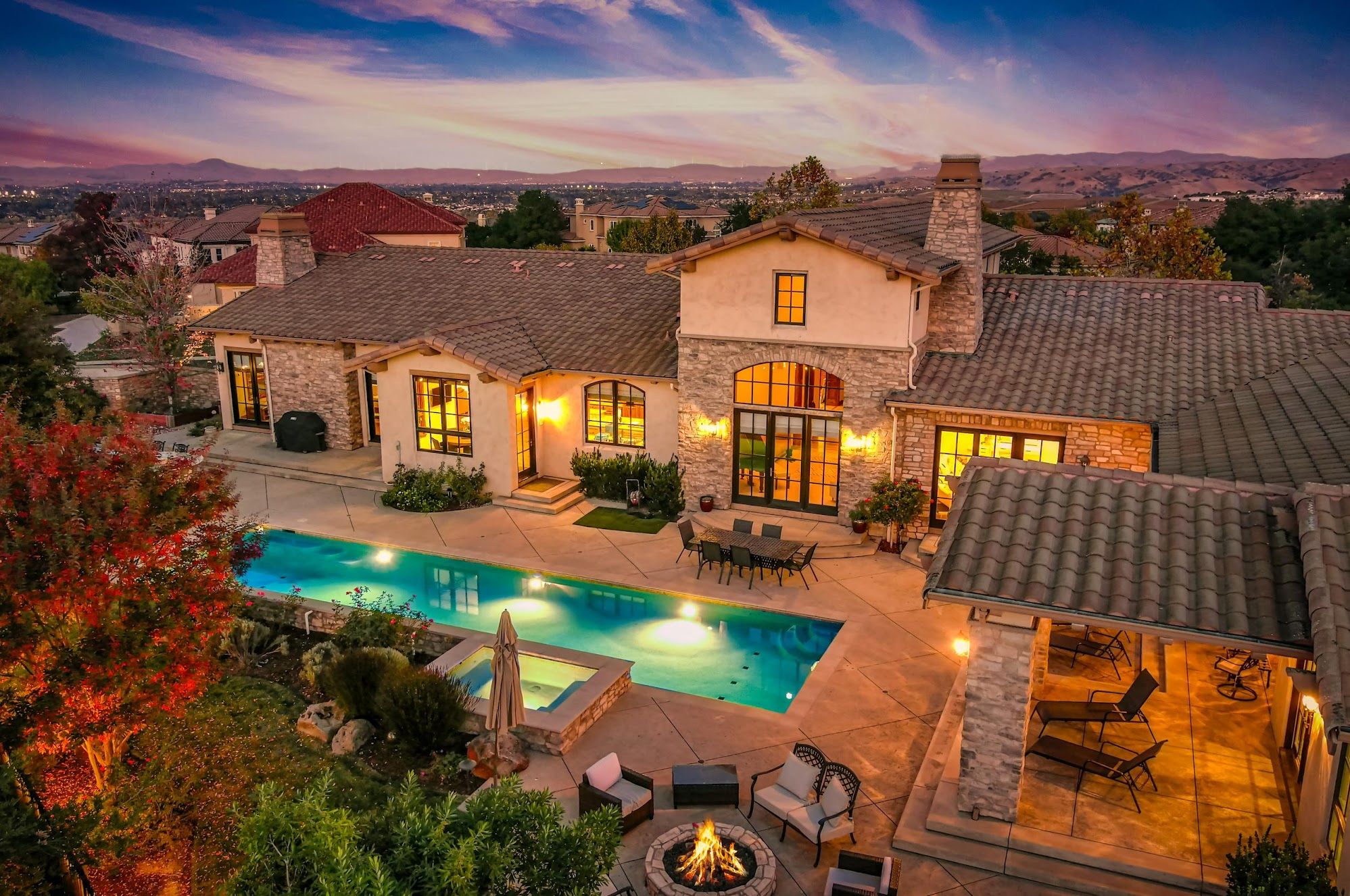
For an overview of active inventory across all price points, view current Pleasanton homes for sale. Pleasanton's citywide single-family median in early 2026 is approximately $1.6 million, down roughly 2–3% year-over-year. Ruby Hill operates in a separate pricing tier: closed-sale medians from reliable data sources cluster in the $3M–$4M range depending on the period and methodology, with individual listings spanning roughly $2.4M to over $7M. The important context is that Ruby Hill has very few transactions per quarter, which makes year-over-year percentage changes statistically volatile: one outsized sale can swing the median 20%+ in either direction. Treat any single-month YoY figure for Ruby Hill as directional color, not reliable trend data.
What Hidden Costs Should Families Expect When Buying in Ruby Hill?
The purchase price is the headline; the carrying cost is the story. If you are considering building a custom estate on a lot or evaluating an ADU addition, review our detailed guide on custom home development costs in Pleasanton before making an offer. On a Ruby Hill home with an assessed value near $2.16 million, annual property taxes run approximately $24,800, roughly 1.1-1.2% of assessed value under Proposition 13 rules, with new buyers resetting to current market value at purchase. HOA dues apply community-wide, and the optional but socially expected golf club membership adds a separate initiation fee plus monthly dues that can collectively reach several hundred to over a thousand dollars per month depending on membership tier. Insurance on hillside and open-space-adjacent properties has tightened significantly in the East Bay following fire risk reclassifications; budget for elevated homeowner's insurance relative to flat-neighborhood comparables. For a deeper breakdown of property taxes, Mello-Roos, and utility reserves, see our full analysis on the hidden costs of buying a luxury home in Pleasanton.
- Property taxes: Budget roughly 1.1–1.2% of your actual purchase price annually, not the prior owner's Prop 13 base.
- HOA dues: Review the most recent reserve study and budget. Underfunded reserves are a red flag regardless of neighborhood prestige.
- Golf club fees: Confirm whether initiation is optional or socially expected for your lifestyle. Initiation alone can reach five figures.
- Fire insurance: Request quotes from multiple carriers before removing your insurance contingency. Some buyers have been surprised by limited carrier availability on hillside parcels.
- Closing costs (seller side): For a $1.6M Pleasanton home, traditional transaction costs typically land in the $90,000–$105,000 range inclusive of commissions, transfer tax, title, and escrow. Scale this proportionally for Ruby Hill-tier purchases.
Frequently Asked Questions: Relocating to Pleasanton
Should a Silicon Valley family rent in Pleasanton before buying?
Renting first makes the most sense when your children are approaching a school transition year, your office attendance policy is in flux, or you have not yet tested the commute during peak rush hour. A 6–12 month rental in Pleasanton costs roughly $36,000–$60,000 in rent, but it eliminates the $50,000–$150,000 friction cost of buying and selling again within 24 months if you discover a school-boundary misfit or commute-tolerance problem.
How long does relocation from Silicon Valley to Pleasanton typically take?
A realistic planning horizon is 3–5 months from serious search launch to move-in. Best-case scenarios (pre-approved buyer, flexible on timing, winning in the first one or two offer attempts) can compress to 45–60 days. Worst-case scenarios involving multiple offer losses, sale contingencies, or school boundary pivots can extend to 9 months. Most families target a June–August close to align with the PUSD academic calendar.
Which Pleasanton neighborhoods offer the best balance of commute, schools, and value in 2026?
For most tech-employed families commuting two or more days per week to the South Bay, Mission Hills and Ventana Hills represent the strongest all-around balance: competitive school access, generous home sizes in the high-$1M to low-$2M range, no HOA complexity, and proximity to Mission Park and Pleasanton's downtown retail corridor. Pleasanton Valley and Birdland edge them out on walkability, while Ruby Hill leads on gated prestige and golf amenities.
What are the realistic commute times from Pleasanton to Silicon Valley during peak hours?
Departing Pleasanton between 5:30–6:00 AM averages 40–50 minutes to Mountain View or San Jose via I-680 South. Departing between 7:30–8:30 AM extends drive times to 70–90+ minutes due to congestion near Sunol Grade and the I-680/237 interchange. Homes in western Pleasanton (Birdland, Pleasanton Valley) save 5–10 minutes on freeway access compared to Ruby Hill.
Categories
Recent Posts