Pleasanton vs. Livermore: The Real Tri-Valley Trade-Off (2026)
In my years helping buyers move through the Tri-Valley, the Pleasanton-versus-Livermore question comes up in almost every consultation. It sounds like a simple price comparison, but it's really a trade-off between three things: your commute tolerance, your school priorities, and how much you're willing to carry in ongoing costs that never show up on a Zillow listing. Here's how I walk clients through it.
Jump To Section:
How Much More Does Pleasanton Actually Cost Than Livermore?
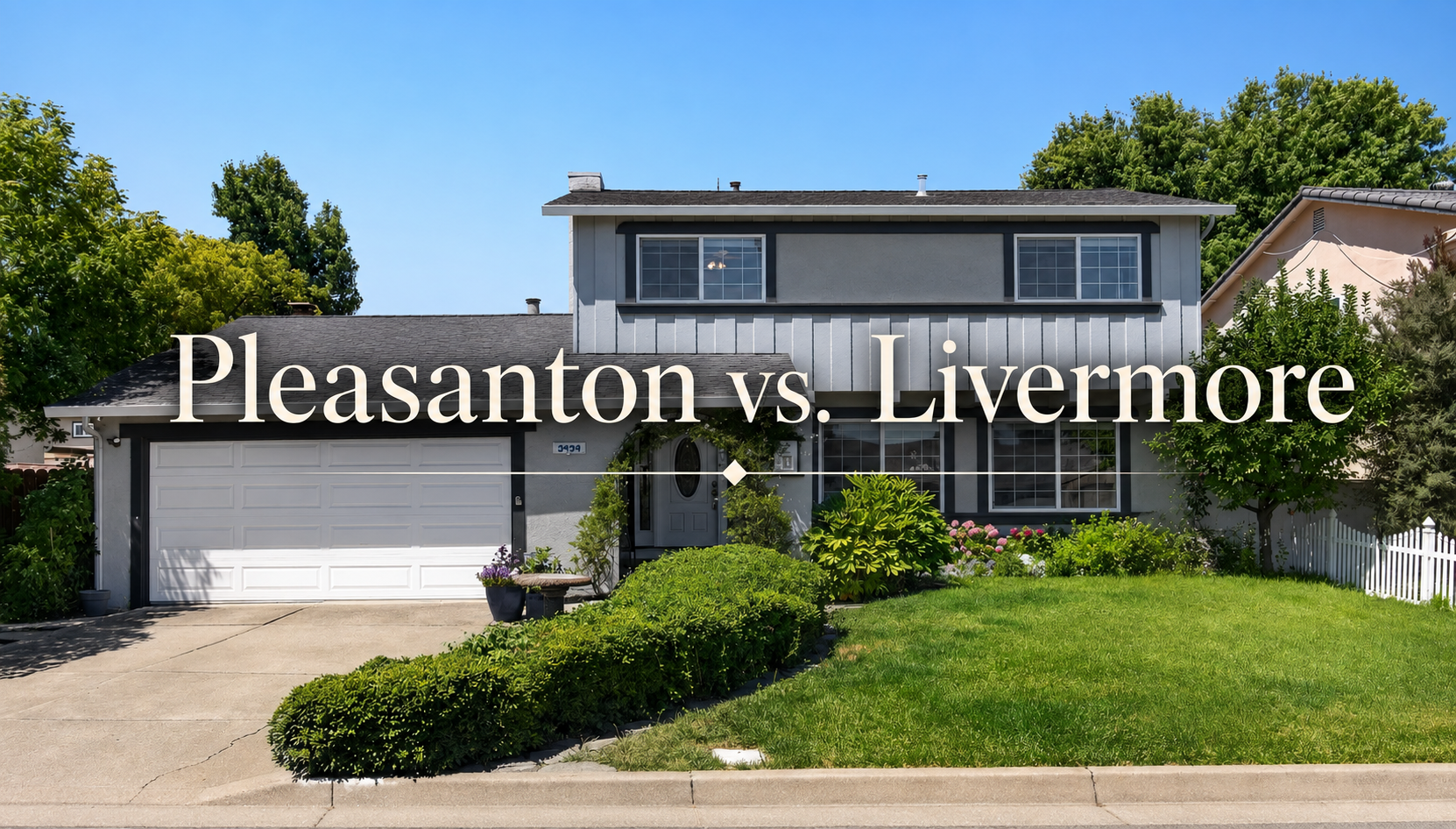
As of mid-2026, Pleasanton's median single-family home price sits at $1,820,000, or $828 per square foot, compared to Livermore's median of $1,210,000, or $692 per square foot. That's roughly a $610,000 gap, which in Livermore typically buys a meaningfully larger lot or an extra 500-700 square feet of living space at a comparable build quality.
Where Does the Extra $610,000 Actually Go?
- Faster commute access to the I-580/680 interchange and BART-adjacent neighborhoods
- Placement in Pleasanton Unified School District's top-rated feeder schools
- Tighter inventory: Pleasanton saw only 65 new listings in June 2026 versus Livermore's 88
- A 13-day average days-on-market with a 101% sale-to-list ratio, signaling buyer competition
None of that premium buys you a bigger house. It buys you proximity and school certainty, which is exactly the trade-off I ask Silicon Valley commuter families to think through before they anchor on price per square foot alone.
Which High School Will Your Kids Actually Attend?
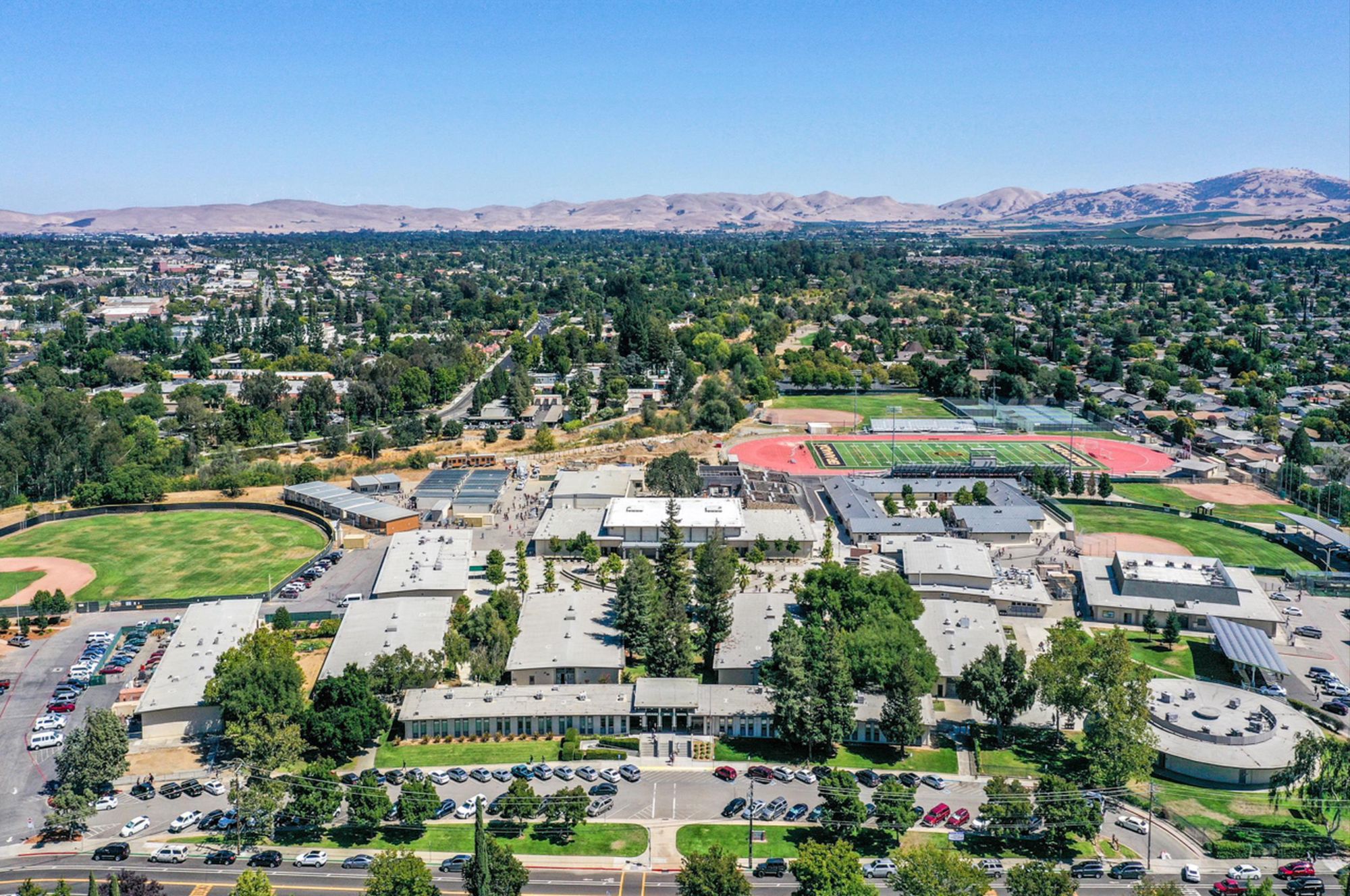
Pleasanton Unified redrew its high school boundaries in 2024, and I still see buyers make offers without checking which side of the line they landed on. Foothill High School now serves the Fairlands, Donlon, Lydiksen, and Hearst elementary tracts, while Amador Valley High School serves Alisal, Mohr, Valley View, Vintage Hills, and Walnut Grove. In Livermore, Granada High School is the top-rated comprehensive public option, consistently outperforming Livermore High on state academic metrics, and it primarily serves the southern and Springtown subdivisions.
Is the Livermore-to-Silicon Valley Commute Actually Workable?
Yes, but it depends on your daily schedule. Livermore commuters can use the Altamont Corridor Express (ACE) rail, with stops at Vasco Road and Downtown Livermore, or drive I-680 South and Route 84 toward the Peninsula. It's a real option for two or three office days a week, though less realistic for a daily 8 a.m. arrival.
The Hidden Line Item Most Buyers Never Ask About: Mello-Roos
This is the nuance I flag first with every out-of-area buyer. Mello-Roos is virtually non-existent in established Pleasanton and Livermore neighborhoods, but many buyers cross the city line into newer East Dublin developments to chase square footage, only to get hit with a $1,500 to $3,500 annual surprise on their tax bill. Because lenders fold recurring Mello-Roos payments directly into your debt-to-income ratio, a high assessment can quietly reduce your maximum purchasing power by roughly $50,000 before you even get to the insurance line item below. If you are weighing a new development or custom lot build in either municipality, review our full guide on custom home development costs in Pleasanton to factor in city impact fees and utility hookups.
What Does Wildfire Insurance Really Cost in the Hills?
If you're looking at a foothill or hillside property in a Fire Hazard Severity Zone (think parts of Ruby Hill or the eastern Pleasanton ridgeline), standard homeowner's insurance is often simply unavailable. Most owners end up combining a California FAIR Plan fire-only policy with a Difference in Conditions (DIC) wrap for liability, theft, and water damage, which together run $5,000 to $12,000 a year. I walk every hillside buyer through this exact math in my breakdown of hidden costs on Pleasanton luxury homes, because it's rarely disclosed until underwriting is already underway.
What Will Closing Costs Actually Look Like?
Alameda County has its own local customs that surprise relocating buyers, especially those coming from Santa Clara County. Buyers here typically cover escrow fees and the owner's title policy (the reverse of Santa Clara's norm), while sellers customarily pay the county's documentary transfer tax of $1.10 per $1,000 of assessed value. Neither Pleasanton nor Livermore charges an additional city-level transfer tax, which is a meaningful savings compared to Oakland or Berkeley.
How Do Gated Communities Like Ruby Hill Change the Math?
Ruby Hill's mandatory HOA dues typically run $400 to $800 a month for gated security and common-area upkeep, with golf and social club memberships billed separately. I've helped several buyers weigh whether Ruby Hill makes sense for a non-golfer, and the honest answer usually comes down to how much you value the privacy and consistency of a gated community versus the flexibility of a non-HOA property elsewhere in the Tri-Valley.
So Which One Actually Fits You?
If your priority is a shorter Silicon Valley commute and top-tier school certainty, Pleasanton's premium is buying exactly that. If lot size, a lower entry price, and more breathing room in your monthly carrying costs matter more than shaving twenty minutes off your drive, Livermore's value proposition is hard to beat. I've put together a closer comparison of Pleasanton against San Ramon and Danville if your budget is stretching toward the $2M mark, and a look at how tech employment shifts are affecting Tri-Valley values if timing is part of your decision. Whichever direction you're leaning, I'd rather walk you through the real numbers on a specific address than let a portal's automated estimate make the call for you. For a broader orientation to the area, my guide to moving to Pleasanton and my overview of private school options nearby are good next stops, along with my notes on Pleasanton's seller-side tax considerations if you're also selling as part of this move.
Frequently Asked Questions: Pleasanton vs. Livermore
What is the price difference between homes in Pleasanton and Livermore?
As of mid-2026, Pleasanton's median single-family home price sits at $1.82M ($828/sq ft), whereas Livermore's median sits at $1.21M ($692/sq ft). That $610,000 price gap in Livermore typically buys a larger lot or an extra 500-700 square feet of living space.
How do commutes to Silicon Valley compare from Pleasanton vs. Livermore?
Pleasanton offers immediate freeway access to I-580/I-680 and direct BART access via Dublin/Pleasanton station. Livermore commuters can take ACE Rail or drive Route 84/I-680, which adds 15 to 25 minutes each way during peak Silicon Valley commute hours.
Do homes in Pleasanton or Livermore carry Mello-Roos taxes?
Mello-Roos/CFD special assessments are virtually non-existent in established Pleasanton and Livermore neighborhoods. However, newer developments in nearby East Dublin carry $1,500 to $3,500+ annual CFD taxes that increase monthly carrying costs.
Categories
Recent Posts