Sell First or Use Bridge Financing? What $2M+ Pleasanton Homeowners Actually Do
If you own a home in Pleasanton and you're looking to move into the $2M–$4M range, one question drives nearly every conversation I have with clients at this stage: do you sell first, or do you secure the next home using bridge financing? There is no universal answer — but there is a right answer for your specific equity position, risk tolerance, and how competitive the segment you're buying into actually is right now.
What follows is a practical breakdown of how buyers at this price point are navigating the timing problem in the current Tri-Valley market. I'm going to walk you through both paths the way I would in a strategy session — without the pressure, and with the numbers that matter.
Why the Timing Problem Is Especially Acute at the $2M+ Level in Pleasanton
At the $2M+ price point in Pleasanton, inventory is thin and move-in-ready homes receive serious attention within days. Sellers in this segment routinely decline contingent offers, which means arriving without your current home sold — or a financing bridge in place — can disqualify you before negotiations even begin. The Tri-Valley luxury market does not wait. A buyer who is "almost ready" is effectively not ready.
This creates a structural pressure that mid-range buyers don't face to the same degree. In the $800K–$1.2M range, contingent offers are sometimes accepted, and timelines can flex. Above $2M, the sellers often have the leverage to demand clean, confident transactions. Your preparation strategy needs to match the market you're entering — not the one you're leaving.
There are two primary paths for move-up buyers in this position: sell first, then buy (sequential), or use bridge financing to buy first, then sell (concurrent). A third hybrid approach — the simultaneous close — is possible but requires precise coordination and carries its own risk profile. Each path has a legitimate use case depending on your situation.
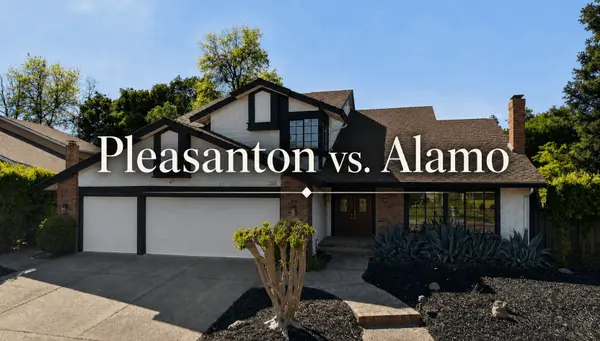
Some move-up buyers in Pleasanton are also weighing whether their next home should remain in Pleasanton or expand into neighboring luxury markets. If you're evaluating that broader question, this comparison of Pleasanton versus Danville, Alamo, and Diablo luxury homes breaks down how those four markets differ in pricing, inventory, and lifestyle before you commit to a direction.
Selling First: Who It's Right For and What You Give Up
Selling your current Pleasanton home before purchasing your next one puts you in the strongest possible negotiating position as a buyer. You arrive with cash clarity, no contingencies, and a defined timeline — all of which sellers of $2M+ homes prefer. The tradeoff is temporary displacement and the real possibility of a gap between closing dates that forces a rental or extended stay with family.
For most of my clients in this price range, selling first makes the most sense when:
- Your current home has strong equity (typically $800K+ net proceeds) that you intend to apply directly to the new purchase
- You have flexibility to rent for 60–120 days without significant financial or logistical hardship
- You want to avoid carrying two mortgages simultaneously, even briefly
- You're targeting a home type that comes to market with some frequency — reducing the risk of a long search once your funds are freed
The risk of selling first is behavioral: once your proceeds are in hand and the pressure is on, buyers sometimes make compromised decisions. They purchase a home that's "close enough" because they're living out of suitcases. I've seen this pattern cost clients far more than a bridge loan would have. If you sell first, commit to a clear hold line on your next purchase criteria — and give yourself enough runway that urgency doesn't distort judgment.
One practical note: in the current Pleasanton market, well-prepared sellers in the $1.2M–$1.8M range are often moving in under 30 days to contract. If you price competitively and the home is presented well, the sell-first path doesn't require the months of limbo buyers fear. It can be tight and efficient with the right preparation.
Bridge Financing: When It's the Strategic Move, Not Just a Convenience
A bridge loan allows you to use the equity in your current home as collateral to fund the purchase of your next property before your current home sells. It is not a workaround or a sign of financial weakness — at the $2M+ level in the Tri-Valley, it is often the precise tool that lets a prepared buyer act decisively when the right property appears. Bridge financing is most powerful when inventory is constrained and the cost of waiting is higher than the cost of carrying.
Here's how a bridge loan typically works in a Pleasanton move-up scenario:
- A lender extends short-term financing (usually 6–12 months) secured against the equity in your departing residence
- You use those funds to close on the new home — often without a sale contingency
- Once your current home sells, you pay off the bridge loan, typically from proceeds
- Bridge loan rates are higher than conventional mortgage rates — currently in the 8–10% range depending on lender and structure — but the carrying period is short
The math on bridge financing often surprises clients when they actually run it. Carrying 9% interest on a $600K bridge loan for 90 days costs roughly $13,500 in interest. If that loan allows you to purchase a home that would otherwise have gone to a non-contingent buyer, and prevents you from settling for a second-choice property, the cost is rational. It becomes irrational when the carrying period extends beyond expectations — typically because the departing home is overpriced or needs more preparation than anticipated.
Bridge financing works best for buyers who:
- Have substantial, accessible equity in their current home (typically 40%+ loan-to-value headroom)
- Are targeting a specific sub-market or home type with limited inventory — custom estates, specific school attendance zones, particular Pleasanton neighborhoods like Ruby Hill or Ironwood
- Can realistically sell their current home within 90 days at a clear price
- Have dual income or reserves sufficient to carry two payments for a quarter if needed
If you're using bridge financing specifically to buy into Danville, Alamo, or Diablo — markets with even thinner inventory than Pleasanton at the luxury level — the carrying cost math often becomes even more compelling. Those sub-markets move quickly, and contingent offers are rarely competitive. See how Pleasanton compares to Danville, Alamo, and Diablo on inventory depth and price-per-square-foot before you decide which market you're buying into.
The Simultaneous Close: High Coordination, Lower Risk Than It Sounds
A simultaneous close — where the sale of your current home and the purchase of your next home close on the same day or within 24–48 hours — is achievable in the Pleasanton market under the right conditions. It eliminates bridge carrying costs and removes the displacement gap, but it requires a level of coordination between both transactions that can introduce fragility. One delay in either deal can unravel both.
For this to work reliably, both transactions need to be in contract with aligned timelines, cooperative buyers and sellers on both ends, and a lender who has confirmed they can fund both closings in sequence. I typically recommend this path when clients have already secured a sale on their current home and identified a purchase target where the sellers have flexibility on close date. It is not a strategy to plan around — it's one you execute when the conditions present themselves organically.
If you're in contract on your sale and you haven't yet found your next home, resist the temptation to force a simultaneous close by rushing the search. Closing your sale cleanly and entering the buy-side as a cash-clear buyer is almost always the better outcome than a stressed same-day double close on a property you weren't fully confident in.
How to Decide: A Framework Based on Your Numbers
The right path is determined by three variables: your equity position, your carrying capacity, and the specificity of what you're buying. A client with $1.2M in equity, dual income, and a clear target neighborhood should look seriously at bridge financing. A client with $600K in equity, a single income, and flexibility on location should almost certainly sell first. Most situations fall somewhere between — and that's exactly where a conversation with a lender and an honest look at your risk tolerance becomes essential.
Here is the decision framework I walk my clients through:
- Step 1 — Establish your net equity: Get a real number from your current lender. Not a Zestimate — an actual payoff figure against a realistic sale price.
- Step 2 — Model the bridge cost: Ask a bridge lender to quote you on a 90-day carry. Run the math on 60, 90, and 120 days. Know what you're agreeing to before you're in it.
- Step 3 — Assess your target inventory: How often do homes that match your criteria come to market in Pleasanton or the broader Tri-Valley? If the answer is "two or three per year," bridge financing protects you from missing them. If it's monthly, sell first.
- Step 4 — Get pre-approved for both paths: A strong local lender can structure both a conventional purchase approval and a bridge loan scenario simultaneously. Having both in your back pocket means you can move on whichever path the opportunity requires.
- Step 5 — Set your sell-first fallback price: Before going to market on your current home, agree internally on the lowest price you'd accept. This prevents the urgency-driven discounting that often follows a failed simultaneous close.
What Pleasanton's $2M+ Market Conditions Mean for This Decision Right Now
As of early 2026, the Pleasanton luxury market is operating with limited resale inventory above $2M, sustained demand from Tri-Valley tech and professional buyers, and a mortgage rate environment that has modestly improved but not dramatically reduced carry costs. Sellers of premium properties — particularly in gated communities and homes with custom finishes — are receiving qualified attention within the first two weeks of listing. This is not a slow market at that tier.
What this means practically: if you are a move-up buyer in Pleasanton and you are even considering the $2M+ segment within the next 12 months, you should be in a lender conversation now. Not when you find the home — now. The buyers who lose in this market are the ones who were financially and emotionally ready but not structurally ready when the opportunity appeared.
Bridge financing has become a more common tool at this price point precisely because the cost of waiting — missing a specific home, settling for less — has become quantifiably higher than the cost of carrying. That calculus won't last forever. But in the current Pleasanton environment, it's the math that's driving serious move-up buyers toward the bridge.
Frequently Asked Questions: Sell First or Bridge Finance in Pleasanton
Can I make a contingent offer on a $2M+ home in Pleasanton?
Technically yes, but in practice sellers of $2M+ homes in Pleasanton rarely accept contingent offers when non-contingent buyers are competing. At this price tier, you'll typically need to arrive with your current home already sold or bridge financing already structured. A contingent offer in this segment signals uncertainty that most luxury sellers will simply wait out.
How much does a bridge loan actually cost in the Tri-Valley market?
Bridge loan rates in the Tri-Valley currently run approximately 8–10% annually. On a $600,000 bridge loan held for 90 days, that's roughly $13,500–$15,000 in interest. Most bridge loans also carry origination fees of 1–2 points. The total cost for a 90-day carry on a $600K bridge is typically $19,000–$27,000 all-in depending on the lender and structure.
How long does it take to sell a home in Pleasanton right now?
Well-prepared homes in the $1.2M–$1.8M range in Pleasanton are typically going under contract within 20–35 days in early 2026 when priced correctly. Homes that are overpriced or need preparation can sit 60–90+ days. This distinction matters for bridge financing planning: if your departing home is straightforward and well-priced, a 90-day bridge carry gives you significant cushion.
Should I use bridge financing to buy in Danville or Alamo instead of staying in Pleasanton?
If your target is Danville, Alamo, or Diablo — markets with even thinner luxury inventory than Pleasanton — bridge financing is often the only viable path to compete. Those markets see fewer than a handful of qualifying homes per year in certain price bands, and contingent offers are almost never accepted. The bridge cost is typically worth it to avoid missing a rare opportunity.
What equity position do I need to qualify for bridge financing in California?
Most bridge lenders in California require at least 30–40% equity in your departing property, a clear and realistic sale timeline, and sufficient income to carry both the bridge loan and the new mortgage simultaneously — even briefly. Lenders will underwrite both properties as if you'll hold them at the same time. Strong credit (720+) and documented reserves are standard requirements at the $2M+ purchase level.
Working With an Agent Who Understands Both Sides of the Transaction
Move-up transactions in the $2M+ range require an agent who can hold both the sell-side and buy-side strategy simultaneously — not hand you off or treat them as sequential, disconnected events. The timing, pricing, and negotiation on your departing home directly affects your leverage and confidence on the purchase side. Those two transactions are one strategy, not two.
If you're evaluating your options as a Pleasanton move-up buyer, I'd encourage you to start with a strategy session that looks at your current home's realistic market value, your equity position, and the specific sub-markets you're targeting on the buy side. That conversation usually takes 45 minutes and eliminates most of the uncertainty that makes this transition feel overwhelming.
Schedule a move-up strategy session to map out your timeline, run the bridge financing numbers, and identify the right sequencing for your situation.
Categories
Recent Posts