Pleasanton vs San Ramon vs Danville: What $2M Actually Buys in Each City Right Now
A $2 million budget is serious buying power in the Tri-Valley. But how far it stretches, and what it gets you, depends entirely on which city you're in. Pleasanton, San Ramon, and Danville each serve different buyer profiles, and the differences aren't subtle. This guide breaks down what $2M actually delivers in each market, so you can match your budget to the life you're planning to live.
If you're also comparing Pleasanton against higher-end Tri-Valley alternatives, see this related guide: Pleasanton vs. Danville, Alamo, and Diablo Luxury Homes.
Jump To Section:
What $2M Buys in Each City: The Honest Comparison
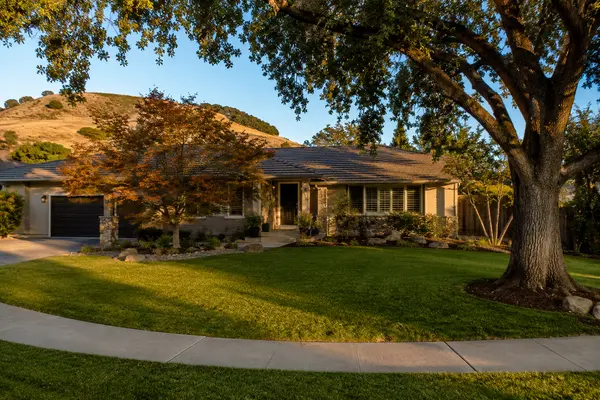
In San Ramon, $2M typically delivers the most interior square footage and the newest construction of the three cities. In Danville, $2M sits close to the current median for detached single-family homes, meaning you're shopping at market center, not the entry level. In Pleasanton, $2M lands well above the city's current median, giving you access to larger lots, upgraded finishes, or coveted downtown-adjacent neighborhoods that trade at a premium.
Here's how the purchasing power breaks down across the three cities:
| Factor | Pleasanton | San Ramon | Danville |
|---|---|---|---|
| $2M vs. City Median | Well above median; upper-tier access | Above median; strong buying position | Near median (~$2.07M–$2.1M); mid-market |
| Typical Home Age | 1970s–1990s; some updated tracts | 2000s–2010s; newer master-planned | 1980s–2000s; varied stock |
| Interior Square Footage | Competitive; often 2,500–3,500 sq ft | Largest of the three; 3,000–4,000+ sq ft | Slightly smaller than SR; larger lot feel |
| Lot Character | Mix; downtown-adjacent or tract | HOA-governed; landscaped, consistent | Larger, more private lots common |
| HOA / Mello-Roos Exposure | Moderate; varies by neighborhood | Higher; more common in newer tracts | Lower in older areas; present in newer ones |
| School District | PUSD (Foothill, Amador Valley HS) | SRVUSD (Dougherty Valley, California HS) | SRVUSD (Monte Vista, San Ramon Valley HS) |
The short version: if maximum square footage and newer construction matter most, San Ramon wins the value comparison at $2M. If lot privacy and a more established neighborhood feel matter more, Danville delivers, albeit at the cost of some interior space. Pleasanton offers the best of both at a price point that still clears the city's median, especially for buyers who want walkability to a genuine downtown.
School Zones: What $2M Places You In and Why That Matters
Both San Ramon Valley Unified (SRVUSD) and Pleasanton Unified (PUSD) are highly regarded, but treating them as equivalent would be a mistake. The campuses, cultures, and feeder patterns differ in ways that should directly shape which neighborhoods you target.
SRVUSD covers San Ramon and Danville, with high schools including Dougherty Valley, California, Monte Vista, and San Ramon Valley. These campuses are known for academic intensity. Many families I work with who are relocating from competitive Bay Area environments find the academic pressure at SRVUSD schools familiar, even welcome. But students who need more room to explore athletics, arts, or a less pressured environment sometimes find the adjustment steep.
PUSD serves Pleasanton with Foothill and Amador Valley High. Both schools are genuinely excellent and college-preparatory, but the campus culture tends to feel somewhat more balanced between academics and activities. Neither option is objectively superior: the right fit depends on your child's temperament and your family's priorities.
What matters most at $2M is the feeder pattern at the neighborhood level. Homes within the Dougherty Valley High feeder in San Ramon, or in the Monte Vista zone in Danville, consistently command premium pricing and shorter days on market. In Pleasanton, properties near Foothill High and in western Pleasanton neighborhoods attract strong competition even when the broader market softens. Before you fall in love with a specific house, confirm exactly which school it feeds, and verify it directly with the district, not a portal map.
Commute Reality: What Rush Hour Actually Looks Like from Each City
The single most under-researched variable I see $2M buyers overlook is the commute, not the Google Maps estimate, but the actual worst-case trip on a Tuesday morning when the Bay Bridge is backed up to Oakland. The difference can be significant enough to change the city decision entirely.
Here is a realistic breakdown based on commuter-reported data and traffic pattern research:
- San Ramon / Danville to Peninsula (Redwood City, Palo Alto): Off-peak, roughly 45–55 minutes via I-680 south to 101 north. Peak traffic: commonly 1.5 hours or more, with multi-incident days pushing past 2 hours.
- Pleasanton to Peninsula: Similar I-680 exposure south, but I-580 west to 101 adds an alternative route. Still 45–60 minutes off-peak; 1.5+ hours peak.
- All three cities to Oakland / SF: Pleasanton has a slight edge via I-580, and both Pleasanton and San Ramon/Dublin benefit from BART access at Dublin/Pleasanton stations. Parking and ride times add 20–30 minutes but reduce peak-traffic variability significantly.
- To Bishop Ranch / San Ramon employment corridor: San Ramon wins outright for local commuters. Danville residents add only 5–10 minutes. Pleasanton adds 15–20 minutes minimum.
My consistent advice to two-income households making this decision: map both partners' commutes independently. Optimizing for one commuter often creates a serious daily burden for the other. In my experience, commute friction is the most common reason clients consider moving again within three to five years of purchase.
True Monthly Costs at $2M: What the Listing Price Doesn't Show You
The mortgage is the largest line item, but it is not the only one. At $2M, the gap between true monthly carrying costs across these three cities can be $500–$1,500 per month depending on which neighborhood you're in, a difference that should factor directly into your budget modeling.
Property taxes: California's base rate runs approximately 1%–1.25% of assessed value, placing annual taxes on a $2M home in the low-to-mid $20,000s before any additional assessments. Bonds, school levies, and special districts layer on top of this in all three cities.
Mello-Roos / CFD assessments: This is where San Ramon can surprise buyers. Newer master-planned communities in San Ramon, as well as some Dublin-adjacent Pleasanton tracts, carry CFD assessments that can add $300–$600 per month on top of base property taxes. Older Pleasanton and Danville neighborhoods typically do not carry Mello-Roos, making their true monthly cost lower than the list price might suggest.
HOA dues: Newer San Ramon communities (Dougherty Valley, Gale Ranch) commonly carry HOA dues ranging from modest to several hundred dollars monthly. Certain Danville communities, particularly any with amenities or gated access, also carry dues. Many older Pleasanton neighborhoods have minimal or no HOA involvement. Always request 12 months of HOA financials and the reserve study during due diligence.
Insurance: Tri-Valley cities are not classified as high-fire-risk zones at the level of foothills communities, but carrier appetites in California have shifted. Pull current insurance quotes before you close; do not rely on estimates from a year ago.
Closing costs: On a $2M purchase in California, buyer-side closing costs typically fall in the 2%–3% range of purchase price, roughly $40,000–$60,000. In a competitive offer situation, you may also need to budget for an appraisal gap: the difference between your contract price and the appraised value if they diverge. At this price tier, gap coverage of $50,000–$100,000 is not unusual in low-inventory conditions.
Market Speed and Competition: How Hard Is It to Win a $2M Home?
All three cities are operating in a seller-favored environment at the $2M level. Low inventory, strong school reputations, and steady demand from Bay Area employment have kept these markets competitive even through periods of broader softening. Buyers who arrive expecting a deliberate, low-pressure process should recalibrate.
What the data shows for 2025–2026:
- Days on market: Well-located, well-priced homes across all three cities often go pending in 7–14 days. The broader market medians (25–30 days) reflect the full inventory mix, including overpriced and atypical listings. For the homes you actually want, plan for faster movement.
- Sale-to-list ratios: Pleasanton and Danville have been running near or above 100%. That means the list price is effectively the floor on desirable properties, not a negotiating starting point.
- Multiple offers: Common for updated homes in top school zones across all three cities. Waiving or streamlining contingencies is frequently expected to be competitive.
- Inventory levels: Active listings remain constrained. Waiting for "more inventory" has historically meant waiting for higher prices, not more selection.
The strategic implication: passive buyers who want to see everything before deciding are consistently outmaneuvered by buyers who have done their decision work in advance. Know your must-haves, understand your financing flexibility, and have an offer strategy ready before you walk into a showing you love.
Renovation vs. New Build: Older Pleasanton and Danville Homes vs. Newer San Ramon Stock
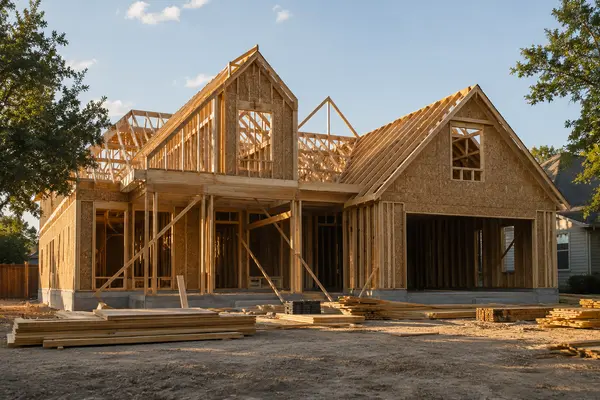
One of the most consequential trade-offs at $2M in these markets is the choice between buying a newer, turnkey master-planned home in San Ramon versus purchasing an older but potentially larger or better-located property in Pleasanton or Danville and improving it.
The case for newer San Ramon construction: you get modern layouts, updated systems, community amenities, and minimal renovation surprises in escrow. The case against: HOA rules, Mello-Roos carrying costs, more uniform streetscapes, and less lot privacy than what similarly priced Danville or older Pleasanton neighborhoods deliver.
The case for an older Pleasanton or Danville home at $1.8M–$2M with $100K–$150K in targeted improvements: you get tailored finishes, potentially more square footage of lot, and a neighborhood character that is harder to replicate in master-planned environments. Older homes in these cities also tend to sit in lower-density areas where supply is genuinely constrained, which historically supports stronger long-term appreciation relative to subdivisions where builders can continue adding units.
The case against: inspection surprises are real on 30–40-year-old homes. Roof, foundation, sewer, and drainage issues surface regularly during Pleasanton and Danville escrows and can either kill deals or require significant budget reallocation. If you choose to pursue a custom build or major renovation in Pleasanton, review our complete guide on Pleasanton custom home permit fees to accurately budget for municipal soft costs. Otherwise, if your renovation tolerance is low or your cash cushion is tight post-closing, a newer San Ramon home may be the more prudent path.
Neighborhood-Level Decisions: Where to Look Within Each City
City-level comparisons only get you so far. The real decision happens at the neighborhood level, and in all three cities, a few hundred feet in the wrong direction can mean the difference between a quiet cul-de-sac and a home that backs to a busy arterial.
In Pleasanton: Western Pleasanton neighborhoods near downtown command walkability premiums and attract consistent buyer demand. Ruby Hill offers a gated, golf-community feel at a higher entry point. Homes near the I-580/I-680 interchange or adjacent to commercial corridors carry noise and air quality considerations that should be visited at different times of day before making an offer.
In San Ramon: Dougherty Valley and Gale Ranch represent the majority of newer construction at this price tier and feed Dougherty Valley High. The west side of San Ramon, closer to Bishop Ranch, offers shorter commutes to local employment but generally older inventory. Avoid any home backing to Bollinger Canyon Road or Crow Canyon Road without a deliberate noise evaluation.
In Danville: The western and central neighborhoods feeding Monte Vista High are the most consistently sought-after at $2M. Green Valley Road corridors and the south Danville flatlands offer larger lots at more accessible price points. Blackhawk, while prestigious, adds HOA and club due structure that may not suit every buyer's financial model.
Frequently Asked Questions
Does $2M buy more house in San Ramon than in Pleasanton or Danville?
Generally yes, in terms of interior square footage. San Ramon's concentration of 2000s-plus master-planned inventory and recent relative price softening make $2M a strong buying position for larger floor plans. Danville's median is closest to $2M, so buyers there are in the heart of the market. Pleasanton's lower overall median means $2M clears many competitors, but the inventory at that price is more varied.
How do I know which school feeder a specific home is in?
Do not rely solely on portal school overlays, as they are frequently inaccurate at address boundaries. Contact SRVUSD or PUSD directly with the specific parcel address for a confirmed attendance zone assignment. Many buyers discover boundary surprises during escrow when it is too late to adjust the offer.
What is a realistic offer strategy for a $2M home in these cities?
For competitive listings, expect to offer at or above asking price with a pre-approval letter in hand and a clean offer structure. Waiving or shortening inspection contingencies is common in multiple-offer situations but carries real risk on older homes. Discuss appraisal gap coverage with your lender before you need it, not after you're in a bidding situation.
Is Mello-Roos negotiable?
No. It is a fixed assessment tied to the parcel, not the sale price. Buyers should request a Mello-Roos disclosure and run the full monthly carrying cost calculation before making any offer on newer San Ramon or certain Pleasanton tracts.
Which city is better for buyers who work remotely now but may need to commute later?
Pleasanton provides the most flexibility, given BART access via Dublin/Pleasanton stations and I-580/I-680 freeway optionality. San Ramon is excellent if the future employer is in the Tri-Valley itself. Danville is the most constrained commute option for Peninsula-based jobs, which may not matter at all if your work situation is stable, but is worth modeling before committing.
How much should I budget for closing costs on a $2M purchase?
Plan for 2%–3% of the purchase price in buyer-side closing costs, or approximately $40,000–$60,000. In a competitive offer, add an appraisal gap reserve of $50,000–$100,000 if your offer exceeds likely appraised value. These are real cash requirements that need to be liquid before offer submission.
Categories
Recent Posts