Moving to Pleasanton, CA: 2026 Relocation, Schools & Cost Guide
Tri-Valley Relocation & Community Advisory
Pleasanton consistently ranks among the top five suburban communities in Northern California for families, but the housing inventory, school feeder assignments, and commute realities are far more nuanced than national real estate algorithms reflect. This guide is built from verified MLS sales data, direct Pleasanton Unified School District (PUSD) boundary maps, and on-the-ground knowledge of neighborhoods from historic Downtown Main Street to the gated ridgelines of South Pleasanton. Read this before submitting an offer.
If you are also cross-shopping neighboring Tri-Valley cities, explore our companion analysis: Pleasanton vs. Dublin: Real Estate, Schools & Tax Comparison.
Direct Answer: Moving to Pleasanton, California in 2026 offers exceptional quality of life, anchored by the #1 ranked school district in Alameda County (PUSD), a violent crime rate 68% below the national average, and dual commuter rail connectivity via BART (to San Francisco) and the ACE Train (to Silicon Valley). Detached single-family home prices range from a median of $1.65M to $1.84M ($784–$810/sq. ft.), with true monthly carrying costs averaging $11,500 to $15,000+ per month (incorporating jumbo financing, Alameda County's ~1.18% base property tax, and insurance). Unlike master-planned areas in East Dublin or San Ramon, established Pleasanton neighborhoods carry zero Mello-Roos CFD special taxes and zero monthly HOA fees.
What Does It Actually Cost to Live in Pleasanton in 2026?
The median sale price for single-family homes in Pleasanton hovers between $1.65M and $1.84M. However, purchase price alone does not reflect monthly ownership expenses. On an executive $1.65M to $2.0M purchase, total monthly outlays frequently exceed $12,000 to $15,000/month:
The Proposition 13 Advantage: Under California's Proposition 13, your base assessed property value is locked to your purchase price, with statutory annual increases capped at 2%. This provides substantial predictability compared to other states where reassessments float with market spikes. For complete details on tax resets and supplemental assessments, see our Pleasanton guide to property taxes and our audit of hidden costs of buying a luxury home in Pleasanton.
Which Pleasanton Neighborhood Is Right for Your Budget and Lifestyle?
Pleasanton features three distinct residential tiers, each matching specific family and commuter requirements:
Entry Single-Family Tier ($1.1M – $1.5M)
Attached townhomes and mid-century single-family homes in Central and West Pleasanton. Ideal for young families and commuters prioritizing walking proximity to Main Street's farmers markets, retail, and local parks.
Established Family Mid-Tier ($1.5M – $2.2M)
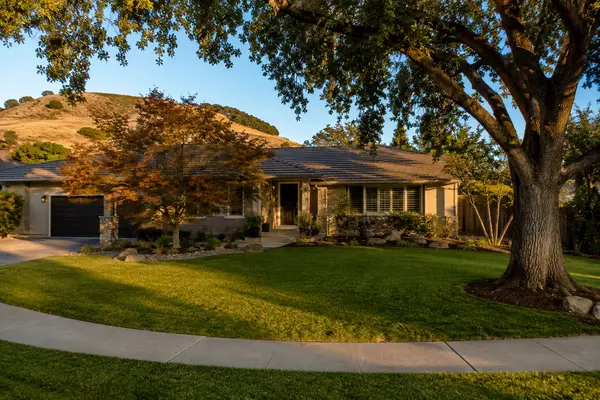
Classic suburban subdivisions including Vintage Hills, Birdland, Del Prado, and Mission Hills. Generous 0.20-acre lots, mature trees, and walkable elementary schools with zero HOA dues.
Flagship Luxury & Gated Tier ($2.5M – $5M+)
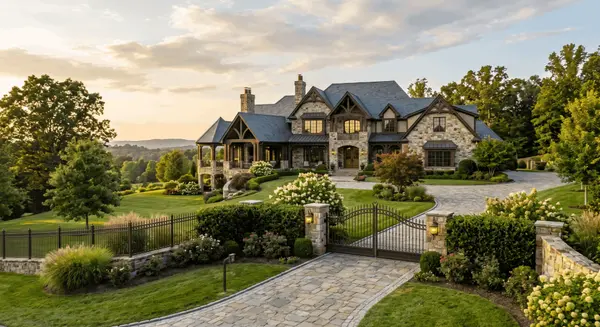
Ruby Hill, Castlewood, Golden Eagle, and custom foothill ridge sites. Gated security, country club facilities, and custom architecture. See our guide to $2M vs. $2.5M luxury homes.
For families evaluating Silicon Valley transit convenience, consult our guide to the best Pleasanton neighborhoods for Silicon Valley tech commuters.
Amador Valley High vs. Foothill High: Does the Boundary Actually Matter?
Both comprehensive high schools in the Pleasanton Unified School District rank among the premier public institutions in Northern California. In academic performance metrics, the "Amador vs. Foothill" debate is effectively a dead heat:
- Foothill High School: Serves southern and eastern Pleasanton (including Ruby Hill, parts of Vintage Hills, and Castlewood). It frequently ranks slightly higher on statewide math and STEM testing indices.
- Amador Valley High School: Serves central and northern Pleasanton (including Pleasanton Valley, Birdland, Del Prado, and Mission Hills), carrying widespread historic recognition and nationally decorated band and robotics teams.
- The Redistricting Note: Ruby Hill was reassigned to Foothill High School under district boundary adjustments. Always verify parcel-specific boundaries via PUSD's official school locator before writing an offer.
If you are also evaluating private preparatory schools, review our complete Tri-Valley private school tuition and curriculum guide (Quarry Lane, Athenian & BASIS).
What Is the Realistic Commute from Pleasanton?
Commute optionality is Pleasanton's major regional advantage. Here is realistic peak-hour travel data across primary Bay Area corridors:
Pleasanton vs. Dublin vs. Danville: Which Fits You?
Cross-shopping these three suburban hubs reveals clear lifestyle distinctions:
- Pleasanton: Balanced sweet spot. Historic Main Street walkability, large mature lots (0.20 to 0.35 acres), top PUSD schools, and dual freeway/rail access. Zero Mello-Roos in established tracts.
- Dublin: Newer construction focus. Modern master plans, smart-home turnkey builds, and community clubhouses. Trades private yard space for density and carries $1,500 to $6,000+/year in Mello-Roos CFD bonds. Read our full Pleasanton vs. Dublin comparison.
- Danville: Traditional prestige. Historic Hartz Avenue dining, large wooded 0.30+ acre lots, and proximity to Mount Diablo. Higher median prices (~$2.1M+) and car-dependent commutes. Review our $2M Tri-Valley home guide.
Major Employers & Corporate Campuses in Pleasanton
Pleasanton hosts the 850-acre Hacienda Business Park, the largest employment center in Northern California. Home to over 475 companies and 20,000 employees, major employers include:
- Workday: Global enterprise cloud software headquarters.
- Veeva Systems: Global cloud-based life sciences software headquarters.
- Roche Molecular Diagnostics: Global biotech research and manufacturing campus.
- Blackhawk Network: FinTech and branded payment solutions.
- 10x Genomics: Life science biotechnology instrumentation.
- Kaiser Permanente: Regional medical and administrative complex.
This strong corporate tax base supports municipal infrastructure and city parks without overburdening residential property rolls.
Is Pleasanton Safe? FBI & Local Police Crime Statistics
Safety is a cornerstone of Pleasanton’s appeal for relocating families. FBI Uniform Crime Reporting (UCR) and Pleasanton Police Department data confirm that Pleasanton's violent crime rate is approximately 68% below the national average.
Property crimes (largely opportunistic retail and auto theft near major shopping corridors) occur at rates well below Alameda County and broader Bay Area averages. Residential neighborhoods remain exceptionally secure, quiet, and family-friendly.
Climate & Microclimates: Summer Heat Realities & Utilities
Pleasanton enjoys a Mediterranean climate with over 260 sunny days annually. However, newcomers from San Francisco or the Peninsula must prepare for summer inland temperatures:
- Summer Temperatures: July and August afternoon highs frequently reach 90°F to 98°F, with peak heat waves exceeding 102°F. Central air conditioning is essential.
- The Delta Breeze Cooling Effect: Pleasanton benefits from evening Delta breezes pushing through the Dublin Canyon, cooling night temperatures down to 58°F to 64°F.
- Utility Budgets: Running dual-zone air conditioning alongside swimming pool filtration pumps during July–September pushes electric utility bills to $500–$800/month. Rooftop solar arrays provide substantial operating savings.
The Three Most Common Deal-Killers When Buying in Pleasanton
- Inspection Surprises in 1980s Resale Homes: Roof underlayment degradation, clay sewer lateral collapse, or multi-zone HVAC failures on mature properties triggering unresolvable repair disputes.
- Late-Stage Jumbo Loan Underwriting Stalls: Volatility in tech equity compensation (RSU vesting schedules), complex self-employment tax returns, or verbal employer verification hiccups within 48 hours of closing.
- Late-Escrow Mello-Roos Discovery: Buyers discovering unanticipated CFD bond taxes on newer parcels because the listing agent failed to disclose special assessment line items upfront.
Pleasanton Real Estate Market Outlook for 2026 and Beyond
Pleasanton remains a supply-constrained housing market bounded by the Pleasanton Ridge, protected agricultural land, and strict urban growth boundaries. Active inventory turns over in an average of 14 to 21 days on market for turnkey properties.
Whether acquiring an executive single-story home in Vintage Hills or a gated estate in Ruby Hill, long-term fundamentals across ZIP codes 94566 and 94588 remain exceptionally solid. For a broader financial analysis, read: Why Luxury Homes in Pleasanton Are a Smart Investment.
Frequently Asked Questions
What is the median home price and cost of living in Pleasanton, CA in 2026?
As of 2026, the median closed sale price for detached single-family homes in Pleasanton sits between $1.65M and $1.84M, while attached condos and townhomes average $900,000 to $1.25M. The true monthly cost of owning an entry-to-mid-tier single-family home ($1.65M purchase with 20% down at 6.75% jumbo rates) ranges from $11,500 to $13,000 per month, factoring in Alameda County property taxes (~1.18% base under Proposition 13), hazard insurance, utilities, and routine home maintenance.
Does Pleasanton, CA have Mello-Roos CFD taxes?
Most established Pleasanton neighborhoods—including Vintage Hills, Birdland, Pleasanton Valley, Del Prado, and Kottinger Ranch—carry zero Mello-Roos Community Facilities District (CFD) taxes. Mello-Roos special assessments ($800 to $5,000+ per year) apply primarily to select newer subdivisions built after 1990 or specific master-planned pockets near East Dublin. Buyers must examine the Alameda County property tax bill and preliminary title report to verify parcel-specific bond line items.
Is Amador Valley High or Foothill High better in Pleasanton?
Both comprehensive high schools in the Pleasanton Unified School District (PUSD) rank among the top 20 public high schools across the San Francisco Bay Area, each maintaining 70%+ math proficiency rates and high UC/Ivy League matriculation. Foothill High School (serving southern and eastern areas, including Ruby Hill, parts of Vintage Hills, and Castlewood) ranks slightly higher on statewide academic indices, while Amador Valley High School (serving central and northern neighborhoods) carries higher historic community recognition. PUSD as a whole ranks #1 among public school districts in Alameda County.
What is the realistic commute from Pleasanton to San Francisco and Silicon Valley?
Commuting from Pleasanton to Downtown San Francisco takes 60 to 70 minutes door-to-door during peak hours via the Dublin/Pleasanton or West Dublin BART stations (~48-minute train ride to Embarcadero). Commuting to Silicon Valley (Mountain View, Sunnyvale, Santa Clara) via I-680 South averages 40 to 50 minutes for early departures (before 6:00 AM), but extends to 70 to 95+ minutes during the peak 7:15 AM to 8:30 AM rush. Silicon Valley commuters can also take the Pleasanton ACE Rail train directly to Great America and San Jose in 45 to 55 minutes.
Which Pleasanton neighborhoods are best for relocating families?
For dual-career households prioritizing walking-distance school access and quick freeway on-ramp connectivity, Pleasanton Valley, Birdland, and Mission Hills are top recommendations ($1.5M to $2.2M) with zero HOA dues. Families seeking larger 0.25+ acre lots and foothill settings favor Vintage Hills and Kottinger Ranch ($1.8M to $2.8M). For executives desiring 24/7 guarded gate security and estate custom homes, Ruby Hill and Castlewood ($2.8M to $5M+) offer private enclaves with country club amenities.
Is Pleasanton safe? What do crime statistics show?
Pleasanton is consistently ranked among the safest cities in California and the United States. According to FBI Uniform Crime Reporting and local police department statistics, Pleasanton's violent crime rate is approximately 68% below the national average, and property crime rates remain significantly lower than broader Alameda County and Bay Area regional benchmarks.
What major employers are located in Pleasanton?
Pleasanton hosts the 850-acre Hacienda Business Park, the largest employment center in Northern California. Major corporate headquarters and campus hubs include Workday (enterprise cloud software), Veeva Systems (cloud life sciences), Roche Molecular Diagnostics, Blackhawk Network, 10x Genomics, and extensive regional operations for Kaiser Permanente.
Should a relocating family rent in Pleasanton before buying?
Renting for 6 to 12 months is advisable if your corporate office attendance policy is subject to change, if you are relocating mid-academic year, or if you need to test-drive peak-hour commute corridors. A short-term rental costs approximately $3,500 to $5,500 per month, preventing the $80,000 to $150,000 in friction costs (closing costs, escrow fees, and transfer taxes) of purchasing a property and reselling within 24 months due to commute fatigue or school boundary misalignments.
Categories
Recent Posts