$2M vs. $2.5M in Pleasanton: What the Extra $500K Actually Buys You
If you're a qualified buyer with a budget somewhere between $2M and $2.5M in Pleasanton, you're not deciding whether this city is right for you. You're deciding how to spend wisely once you're in it. That half-million dollar range represents one of the more consequential decisions in the East Bay luxury market, and it's not as simple as "more money, better house." Here's how I'd walk a serious buyer through it.
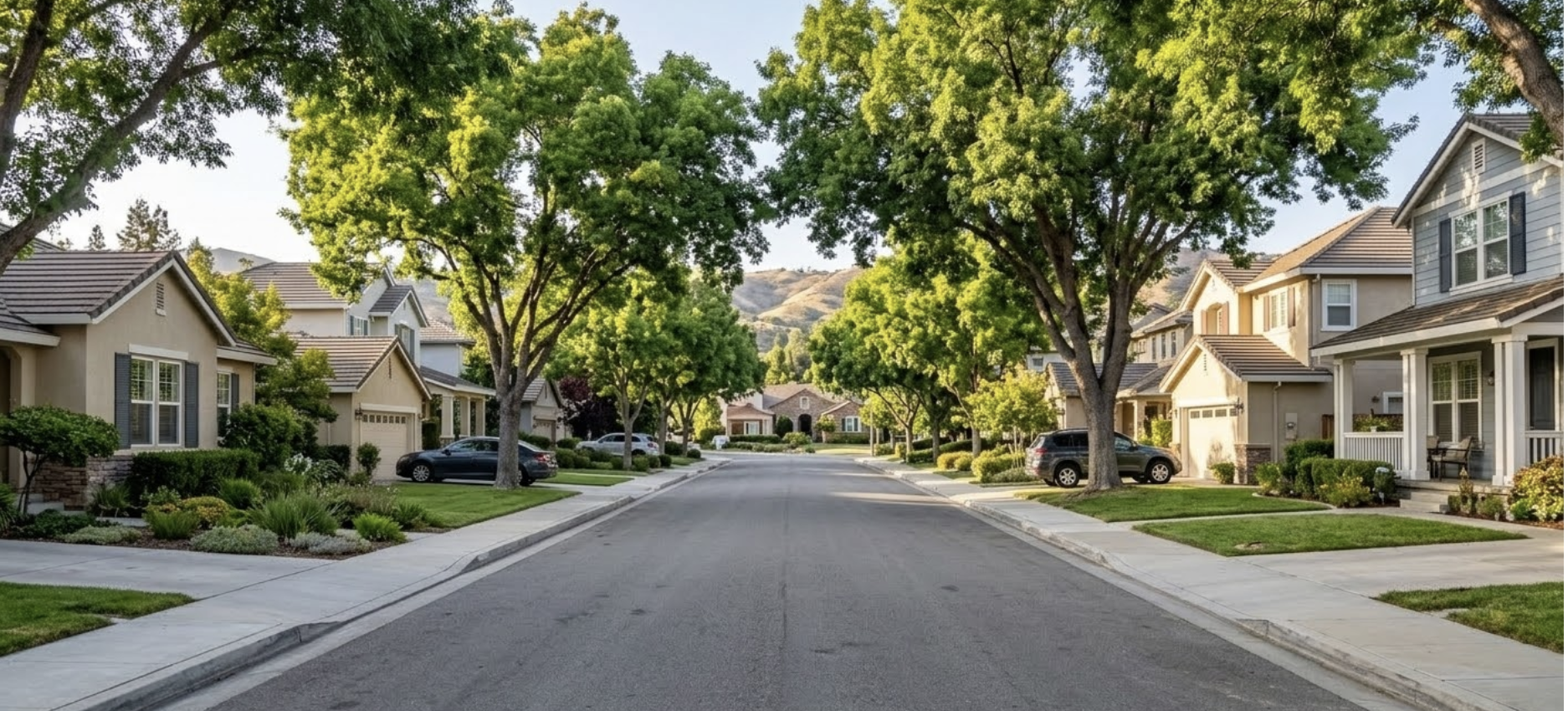
What $2M Gets You in Pleasanton Right Now
At $2M, you are comfortably above Pleasanton's median single-family price which as of early 2026 sits in the $1.6M–$1.8M range but you are not yet in the city's flagship luxury tier. That distinction matters more than most buyers initially expect. A $2M budget in Pleasanton typically opens strong neighborhoods including Mission Park, Birdland, Vintage Hills, and select downtown-adjacent streets within walking distance of Main Street's restaurants and community events.
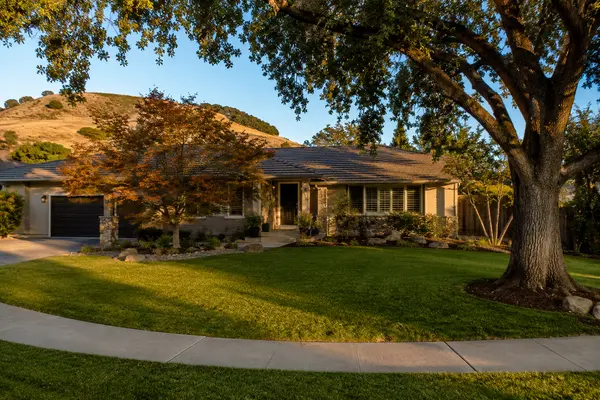
What you realistically get at this price point: a well-maintained or recently updated single-family home, typically 2,200–3,000 square feet, on a standard lot with good school access. You are unlikely to be in a gated community or on a premium view lot at $2M, but you will have access to the Pleasanton Unified School District — one of the strongest in Alameda County — from nearly any neighborhood at this price. The trade-off is that you may be purchasing a home at or near its neighborhood ceiling, which has long-term resale implications worth understanding before you commit.
What $2.5M Opens Up and What It Doesn't Guarantee
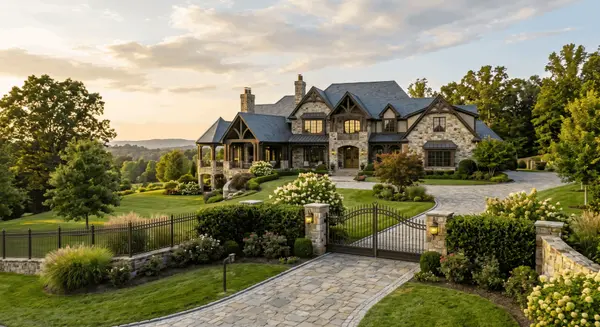
At $2.5M, the category shift is real but it is not automatic. The additional $500K primarily buys access to a different tier of neighborhood rather than a proportionally larger home. Gated and country-club communities most notably Ruby Hill, Castlewood, and The Preserve — become realistic at this budget, along with select custom-home pockets on larger or view-positioned lots. For a detailed side-by-side look at how those three communities actually compare on amenities, HOAs, and price floors, I've written a full breakdown here: Ruby Hill vs. Castlewood vs. The Preserve: Pleasanton's Top Gated Communities Compared.
These neighborhoods carry higher HOAs, sometimes structured as Mello-Roos or special assessments layered on top of standard property taxes, which can meaningfully affect your true monthly cost of ownership. The misconception I see most often: buyers assume $2.5M delivers a home that is proportionally better in every dimension. In reality, constrained inventory at this tier means the premium is frequently about micro-location quality — cul-de-sac position, lot privacy, hillside views, or club access rather than significantly more interior square footage. A $2.5M home in Ruby Hill and a $2M home in Vintage Hills may have comparable livable square footage. What changes is the setting, the HOA structure, and the narrowness of the future buyer pool at resale.
School Zones: Does Stretching Your Budget Change Anything?
For most Pleasanton buyers, school quality does not meaningfully change between a $2M and $2.5M purchase because Pleasanton Unified School District serves virtually the entire city with consistently high-performing schools. Where the calculus becomes more nuanced is in micro-boundary situations: when a buyer is targeting a specific elementary school attendance zone and supply within that boundary is thin, the gap between realistic options at $2M versus $2.3M–$2.5M can be material. I've seen buyers stretch $150K–$200K solely to secure a specific school boundary when comparable homes just outside it were trading at a measurable discount.
Before assuming you need to push your budget for schools, verify the current attendance boundaries directly with the district. Boundary adjustments happen, and paying a premium for a school-zone address that shifts in two years is a risk worth pricing in before you act.
The Condition vs. Stretch Trade-Off Most Buyers Underestimate
One of the most common financial traps I watch buyers walk into is this: they stretch to $2.5M for a better location or neighborhood, then discover the home needs $200K–$300K in updates to match the quality of a $2M turnkey alternative. When you add renovation costs to purchase price and closing costs which on a $2.3M–$2.5M transaction in California typically run 2–4% of purchase price the all-in number can exceed what the home justifies on a per-square-foot basis relative to recently updated comps.
The smarter evaluation is total cost of ownership across the first 24–36 months: purchase price, estimated closing costs, projected near-term capital expenditures, annual property taxes (base rate plus any special assessments), HOA fees, insurance, and utilities scaled to the home's square footage and age. A fully renovated $2M home with no HOA, no Mello-Roos, and low deferred maintenance can be a structurally sounder financial decision than a larger, dated $2.5M home in a premium neighborhood depending entirely on your cash reserves, renovation tolerance, and time horizon.
Commute Access: The Variable Buyers in This Price Range Often Dismiss
Pleasanton has excellent regional access — BART's West Dublin/Pleasanton station, direct I-580 and I-680 interchange, and reasonable proximity to major East Bay employment corridors. But inside the city, micro-access to freeway on-ramps and BART varies more than buyers expect. Neighborhoods on the western side of the city or closer to Stoneridge Drive tend to have shorter drives to the freeway system; neighborhoods farther east or in hillside areas — including some of the premium gated communities — can add meaningful time during peak commute windows.
For households with two commuters or limited remote-work flexibility, commute time differential inside a single city can translate to 20–30 additional minutes per day — and that compounds quickly over years of ownership. If commute is a primary constraint, I'd weight location relative to I-580/680 access heavily before being swayed by a premium neighborhood that sits farther from the interchange.
HOA Fees and Special Assessments: What to Underwrite Before You Offer
At the $2M–$2.5M tier, HOA structure is one of the most underanalyzed variables in the buying decision. Standard neighborhoods with modest or no HOAs sit at one end of the spectrum. Gated country-club communities Ruby Hill, Castlewood, and The Preserve each have distinct fee structures and amenity sets. Monthly carrying costs in the latter category can be several hundred to over a thousand dollars higher per month when HOA, Mello-Roos and special district taxes are aggregated.
The expert error I see buyers make is fixating on the HOA line item without comparing it to the amenity set and its resale contribution. Certain well-run associations retain and grow value precisely because of strong maintenance and community infrastructure. The question to answer is not "is the HOA too high?" but rather "does the HOA cost produce a return in quality of life and resale demand that justifies the carry?" That answer varies by community and by your personal use of the amenities.
Long-Term Resale: Where $2M vs. $2.5M Carry Different Risk Profiles
The resale risk profile diverges meaningfully between these two tiers. Well-located $2M–$2.3M homes in strong school zones and accessible Pleasanton neighborhoods tend to draw a broader future buyer pool — families relocating to the East Bay, move-up buyers from Dublin or Livermore, and buyers priced out of the Peninsula. That demand base provides a degree of price support even in softer market conditions.
Homes at $2.5M and above — particularly those in gated communities with high HOAs or featuring highly customized finishes face a narrower buyer universe at resale. This doesn't mean they don't appreciate; Ruby Hill, Castlewood, and The Preserve each have long track records of strong value retention tied to community quality and land scarcity. But a short holding period of three to five years at the $2.5M tier carries more timing and liquidity risk than it does at $2M, where the comparable pool is wider and demand more durable. If your career trajectory or family situation suggests a possible relocation within five years, hold that consideration near the center of your budget decision.
How to Decide: A Framework I Use With Clients
Before recommending a price tier, I ask clients to answer five questions honestly:
1. What is your true post-closing cash reserve after down payment, closing costs, and a 6-month emergency buffer?
2. Are you buying for a 5-year or 10-plus-year horizon?
3. Do you have a specific school, neighborhood, or commute requirement that only resolves at $2.5M or is that a preference you can satisfy at $2M?
4. What is your renovation tolerance, and do you have accessible capital to execute it without financial strain?
5. How does your household income stability factor into a monthly payment that is meaningfully higher at $2.5M?
If your answers point toward strong cash reserves, a long horizon, specific premium-neighborhood requirements, and stable income $2.5M likely makes sense. If any of those variables is uncertain, securing a strong $2M asset in a well-located, liquid Pleasanton neighborhood is almost always the more durable financial decision. The goal is not to spend more. The goal is to buy the right asset at the right price for your actual situation and in Pleasanton's constrained luxury market, those two things are not always the same.
Contact me to discuss your specific criteria and current Pleasanton inventory.
Categories
Recent Posts