Should You Buy a Single-Story Home Over $2M in Pleasanton, CA? What Downsizers Need to Know Before Making an Offer
As of July 2026, there are 10 active single-story homes priced above $2 million on the Pleasanton MLS not the 14 sometimes cited on third-party sites. If you're downsizing from a larger home and targeting ranch-style properties in this summer market, that limited inventory matters. This guide walks you through what's actually available, what it costs beyond the list price, and which decisions are worth slowing down for.
How Much Inventory Actually Exists for $2M+ Single-Story Homes in Pleasanton?
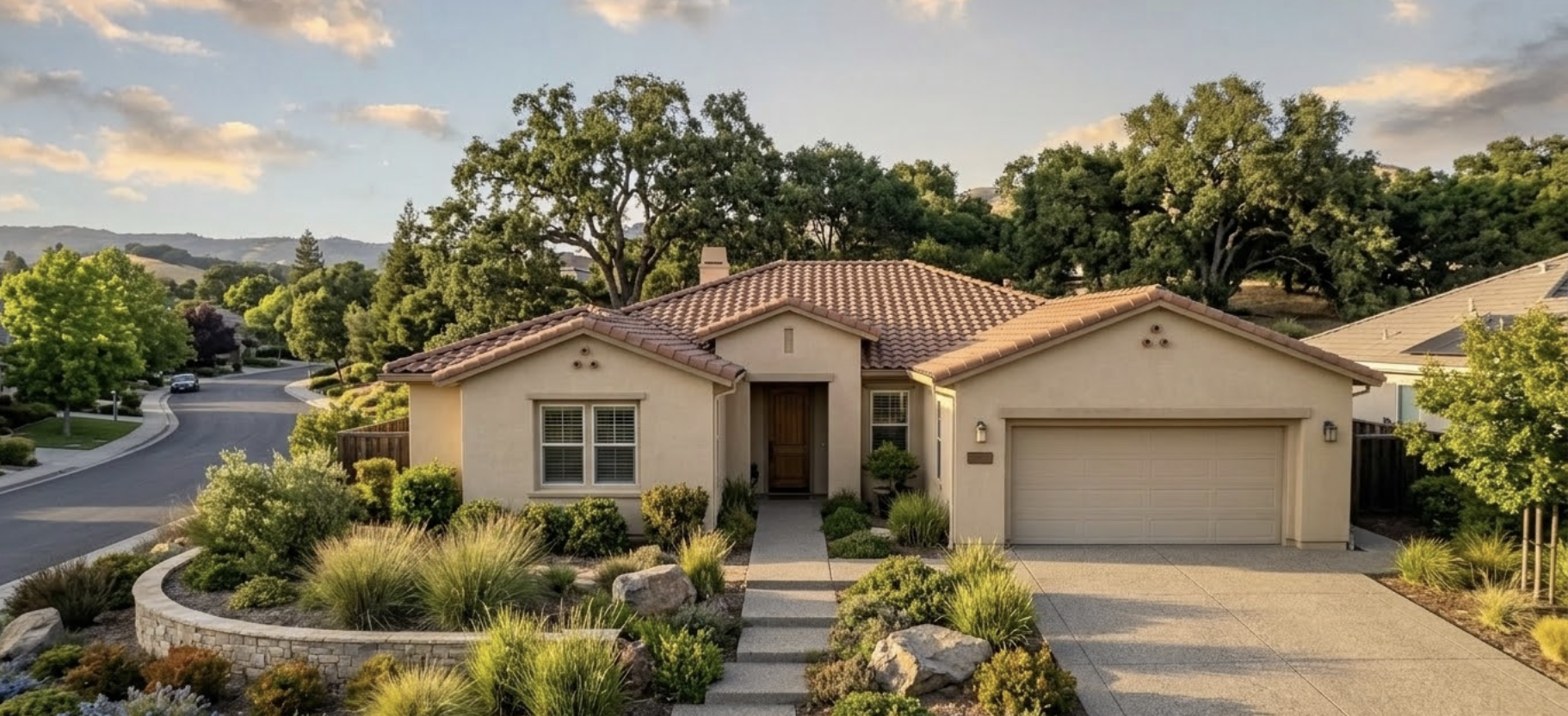
MLS data confirmed in July 2026 shows just 10 active single-story listings at $2M or above. Zillow and Redfin routinely display higher counts, but those figures include pending and off-market properties. When inventory is this tight, the practical takeaway is straightforward: you will likely see the same handful of homes on any given weekend, and competition from other downsizers and tech-industry buyers keeps days on market around 48 — not the 60 Realtor.com reports. The Pleasanton Association of Realtors reports 48 days as the rolling mid-2026 average.
Neighborhoods where this inventory concentrates:
- Ruby Hill — Gated, golf course-adjacent, HOA-governed. Listings here run $2.8M–$4.5M. Expect strict HOA rules on exterior modifications including solar panels and pool additions.
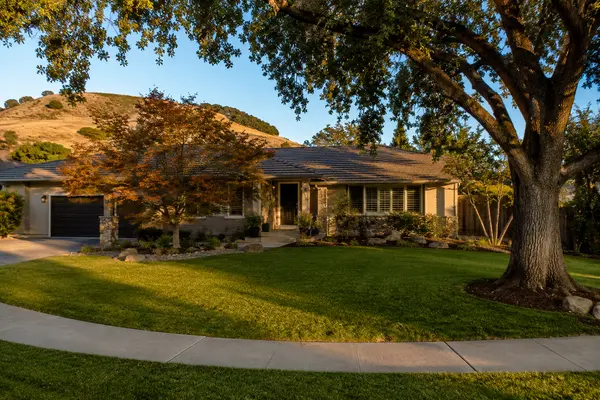
- Vintage Hills — Open neighborhood, Foothill High School zone, strong appreciation history. Single-story ranches here list between $2.1M–$3.2M.
- Moller Ranch — Closer to the 580 corridor, favored by Workday and Livermore National Lab employees. More turnover, slightly more negotiating room.
What Does a $2M+ Single-Story Home in Pleasanton Actually Cost All-In?
The median sale price for this segment in mid-2026 remains steady at $2.8M, but the true cost of ownership extends well past that number. Property taxes reset fully under Proposition 13 — there is no grandfathering of a prior owner's low assessment. At a 1.1% effective rate, a $2.8M purchase means roughly $30,800 in annual property taxes. Add to that MUD (Municipal Utility District) water bond taxes of $8,000–$12,000 per year on parcels approaching an acre, earthquake insurance averaging $3,500 annually for older homes, and HOA transfer fees of $2,000–$5,000 in gated communities.
A realistic total cost-of-ownership view for a $2.8M Ruby Hill ranch:
- Annual property tax: ~$30,800
- HOA fees: $4,800–$9,600/year ($400–$800/month)
- MUD water bonds: $8,000–$12,000/year
- Earthquake insurance: $3,500+/year
- Total annual overhead beyond mortgage: $47,000–$56,000
One trade-off my clients frequently debate: spending $200K more to secure a Ruby Hill golf-view lot versus accepting a $300K discount on an edge-of-town property that adds meaningful annual commute costs if any household member works in-office even part-time.
Which Pleasanton Neighborhood Is Right for Downsizers in 2026?
The right neighborhood depends on what you're optimizing for — school access for grandchildren, commute flexibility, or long-term appreciation. Here's how the three primary options compare for single-story buyers at this price point:
A note on school zones: Foothill High School feeds Vintage Hills ranches and carries a 10/10 rating that historically adds a $300K premium to eligible homes. If visiting grandchildren's school quality is a decision factor, school boundary maps should be verified against specific parcels — boundaries do not always follow neighborhood lines.
What Are the Real Risks When Buying a Luxury Ranch Home in Pleasanton?
The most common deal-failure scenario in this market isn't financing — it's inspection. Roughly 60% of failed transactions in the $2M+ single-story segment collapse during or after the inspection period, most frequently due to seismic concerns in homes built in the 1970s. Retrofit quotes of $50,000–$150,000 are common for older ranch foundations, and many buyers are unprepared for this number after committing emotionally to a property.
Additional risk factors worth building into your decision process:
- Appraisal gaps: At $2M+, financed purchases frequently encounter appraisal shortfalls in a rising market. Cash buyers avoid this entirely and represent a meaningful share of competing offers.
- Ruby Hill HOA restrictions: Renovation limitations are more extensive than disclosures suggest. Solar panel placement, pool additions, and exterior paint colors all require board approval, with timelines averaging 60–90 days.
- Rate lock expiration: The typical 60-day close timeline can stretch to 90+ days in contested offers, which risks expiring rate locks at current rates above 6%.
- MUD tax surprises: Parcel-specific MUD assessments vary significantly. Always pull the actual tax bill history for the specific address — neighborhood averages can mislead by $3,000–$4,000 annually.
- Basement alternatives: California single-story homes rarely have basements. Budget $300/month or more for offsite storage if downsizing from a larger multi-story property with significant belongings.
How Long Does the Buying Process Take for a $2M+ Home in Pleasanton?
A realistic closing timeline for a financed purchase in this segment is 60 days from accepted offer. Cash buyers can close in 45. Contested offers with inspection contingencies, HOA reviews, or appraisal disputes commonly extend to 90–120 days. Here's how the process typically unfolds:
- Pre-approval: 1–3 days with an organized lender; 5–7 days if documentation is incomplete
- Active search and MLS monitoring: Ongoing; new inventory in this segment appears infrequently
- Virtual tours and shortlisting: 1–2 days per viable property
- In-person viewings: Typically weekend-concentrated
- Offer submission: Days 3–7 of active engagement on a specific home
- Inspection and appraisal: 10–14 days post-acceptance
- Contingency removal: Day 21 in standard California contracts
- Close of escrow: Day 30–45 (cash) or Day 45–60 (financed)
The friction point most buyers underestimate is the gap between inspection results and contingency removal. In homes built before 1980, foundation and seismic findings frequently require contractor bids, and those bids take time to obtain. Build that window into your rate lock.
Is Pleasanton a Better Buy Than Danville for Luxury Single-Story Homes?
Pleasanton has appreciated at roughly 7% annually through mid-2026 according to CoreLogic data, outperforming the national luxury average of approximately 5%. Danville, while comparable in prestige, draws from a different employment base and has less direct BART connectivity. For buyers whose household includes anyone using mass transit or working hybrid toward San Francisco, Pleasanton's BART access — and the upcoming Silicon Valley extension adding an estimated 8% value lift to South Pleasanton — is a measurable advantage Danville cannot match.
That said, Danville offers more single-story inventory at comparable price points and less HOA complexity. If full remote work is permanent and school zoning is not a factor, the Danville comparison deserves honest evaluation rather than a reflexive preference for either market.
Frequently Asked Questions: Pleasanton $2M+ Single-Story Homes
Are $2M+ single-story homes rare in Pleasanton?
Yes. As of July 2026, only 10 are active on the MLS. This segment sees limited turnover because owners who purchased before 2020 have little financial incentive to sell given their locked-in Prop 13 assessments.
How does Prop 13 affect a $2M+ purchase in Pleasanton?
Fully. There is no grandfathering of a prior owner's low assessment. Your purchase price triggers a full reassessment at the current 1.1% effective rate. On a $2.8M home, that's approximately $30,800 in annual property taxes from day one.
What does Ruby Hill's HOA actually cover — and restrict?
Ruby Hill HOA fees of $400–$800/month cover gated security, common area landscaping, and community pool access. Restrictions include solar panel placement requiring board approval, limits on exterior modifications, and pool addition timelines that routinely run 60–90 days for approval.
What's the realistic commute from Pleasanton to San Francisco?
Via the 580 freeway during rush hour: 60–90 minutes. BART reduces that to approximately 45 minutes. The Hacienda Drive freeway entry can save 15–20 minutes over downtown Pleasanton access points.
Should I buy a 1970s ranch or a newer build?
Both have merit, but 1970s ranches carry seismic retrofit exposure. Budget $50,000–$150,000 as a contingency until a licensed structural engineer clears the foundation. Newer custom builds eliminate that risk but typically require 12–18 month construction timelines if custom.
Is earthquake insurance required for Pleasanton luxury homes?
It is not legally required but is prudent. Standard homeowner policies exclude earthquake damage. A dedicated earthquake rider for a $2M+ Pleasanton home averages $3,500 per year, with premiums higher for pre-1980 construction.
Categories
Recent Posts