Why Luxury Homes in Pleasanton Are a Smart Investment

When high-net-worth buyers evaluate real estate in the East Bay, the conversation often centers on lifestyle: golf course access, school district boundaries, and square footage. But for the buyers deploying $3M to $6M in cash or vested equity, the primary question is structural: Is a luxury home in Pleasanton actually a smart place to park capital in the current market cycle?
The answer is yes — but only if you understand which specific sub-markets carry the strongest structural floors, how the tech-to-AI wealth transfer is shifting demand, and how to navigate the carrying costs. As we move through 2026, the pleasant suburban narrative is giving way to a more sophisticated calculus. This guide breaks down the investment thesis for Pleasanton luxury real estate.

1. The K-Shaped Market: Why Luxury Is Outperforming the Middle Tier
The Tri-Valley real estate market is no longer moving in unison. We are currently experiencing a distinct K-shaped recovery. While the $1.2M to $1.8M middle market has softened due to legacy tech layoffs and interest rate sensitivity, the luxury tier ($3M+) is demonstrating remarkable resilience.
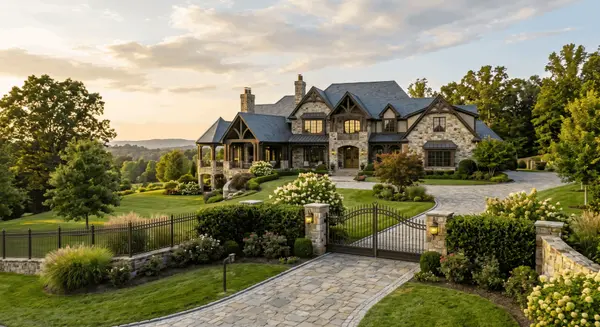
Why? The buyer profile has bifurcated. The mid-market relies heavily on salaried tech employees using conventional financing. The luxury tier is driven by executives, business owners, and early-stage AI sector employees monetizing significant equity windfalls. These buyers are cash-heavy, largely insulated from mortgage rate fluctuations, and highly motivated to secure premium, turn-key assets in established enclaves like Ruby Hill, Vintage Hills, and Castlewood.
2. The Amador Valley & Foothill High Premium: A Structural Floor
In real estate investment, you are looking for "moats" — factors that protect an asset's value during a broader market contraction. In Pleasanton, the most reliable moat is the Pleasanton Unified School District (PUSD) boundary, specifically the zones feeding into Amador Valley High School and Foothill High School.
Properties within these specific boundaries command a historical premium of $200,000 to $350,000 over comparable homes just outside the lines. More importantly, this premium acts as a demand floor. Even when the broader market cools, there is a constant, replenishing pool of high-income families migrating from Silicon Valley specifically to access these schools. When investing in Pleasanton luxury real estate, verifying the precise parcel assignment for these high schools is a non-negotiable step in underwriting the asset's long-term liquidity.
3. Managing the Capital Reality: Prop 13 and Carrying Costs
An investment thesis requires an honest accounting of carrying costs. In California, Proposition 13 limits property tax increases to 2% annually, but it also triggers a full reassessment to the purchase price when the property changes hands.
If you purchase a $4.5 million estate in Ruby Hill, your base property tax allocation will reset to approximately $49,500 annually (based on a 1.1% effective rate), regardless of what the previous owner paid.
Furthermore, luxury investors must account for:
- MUD (Municipal Utility District) Taxes: Parcel-specific bond assessments that can add $8,000 to $12,000 annually on larger luxury lots.
- California FAIR Plan Exposure: If the luxury asset is located in a hillside enclave like Castlewood, private fire insurance may be unavailable. The state-mandated FAIR Plan is increasing rates by 30% in late 2026, which must be factored into your holding model.
- HOA Sub-Association Tiers: Gated communities frequently carry both a master HOA and a neighborhood sub-HOA, pushing monthly dues into the $600–$900 range.
4. The Trans-Bay Migration and BART Infrastructure
Pleasanton holds a unique infrastructural advantage over comparable luxury markets like Danville or Alamo: direct, dual-station access to the BART (Bay Area Rapid Transit) system, alongside immediate access to the I-580 and I-680 interchange.
As major tech employers mandate a return-to-office (RTO) for executives 3-to-4 days a week, the tolerance for two-hour freeway commutes has evaporated. Pleasanton offers the square footage and estate privacy of the deep suburbs, while maintaining a predictable, traffic-independent rail connection to the San Francisco financial district. This transit flexibility ensures that the asset remains highly liquid to a broad spectrum of Bay Area wealth, not just localized East Bay buyers.
Conclusion: The 2026 Strategy
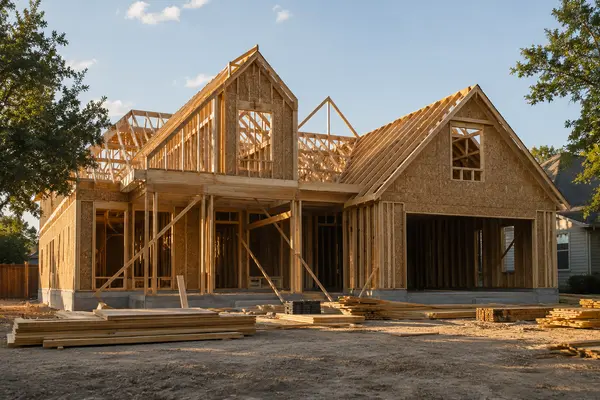
Buying high-end Pleasanton real estate is not a speculative flip; it is a wealth-preservation play. The strategy for 2026 is to target turn-key assets in established PUSD-zoned corridors, bypassing the renovation delays and contractor shortages that are currently suppressing the value of "fixer" estates.
If you are preparing to deploy capital into the Tri-Valley luxury market, do not rely on aggregate portal data. You need parcel-level underwriting regarding school boundaries, MUD taxes, and hillside insurance exposure. Contact our team directly to structure a targeted acquisition plan.
Categories
Recent Posts